Some workplace situations are difficult to explain in a training manual. They’re much easier to understand when you can see them unfold.
How should an employee respond when a customer becomes aggressive? What does respectful communication look like in a high-pressure workplace? And what could happen when important safety procedures aren’t followed?
These are situations where scenario-based training videos can be particularly effective.
Rather than simply telling employees what they should or shouldn’t do, scenario-based videos recreate realistic workplace situations. They allow people to observe behaviours, consider decisions, understand potential consequences and learn how to respond.
For learning and development, training and safety managers, they’re a practical way to bring policies, procedures and workplace expectations to life.
What is scenario-based video training?
Scenario-based training uses realistic situations to demonstrate how people behave, make decisions and respond to challenges in the workplace.
Videos might show an incident unfolding, a difficult conversation between colleagues or an employee dealing with an unexpected situation.
They can demonstrate good practice, poor decisions, alternative approaches or the consequences of particular actions.
The aim isn’t simply to entertain or dramatise an issue. It’s to create a learning experience that helps people recognise similar situations and make better-informed decisions when they encounter them.
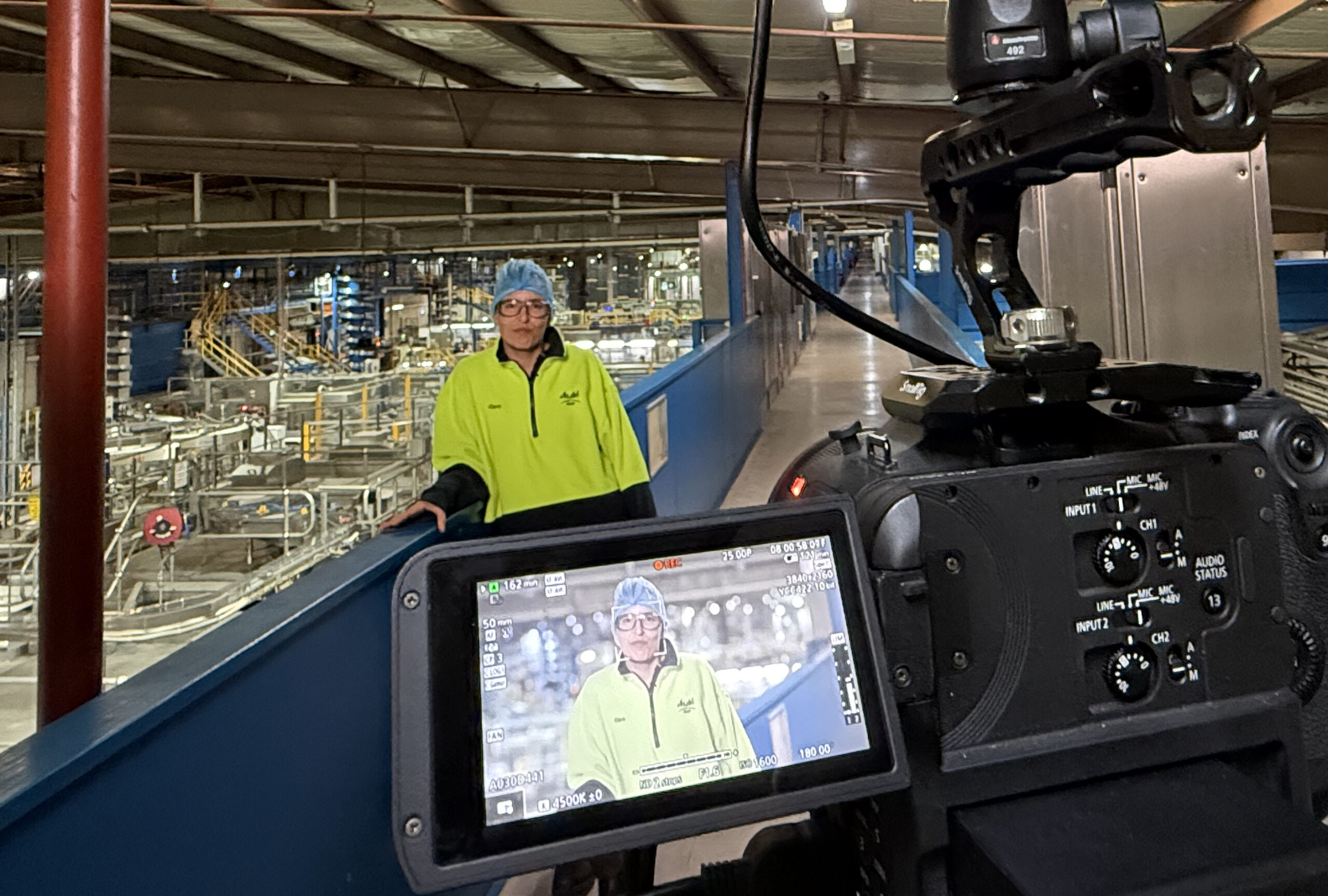
At Visual Culture, we’ve produced scenario-based training videos across workplace safety, healthcare and retail environments. Each required a different approach, but all used realistic storytelling to communicate important lessons.
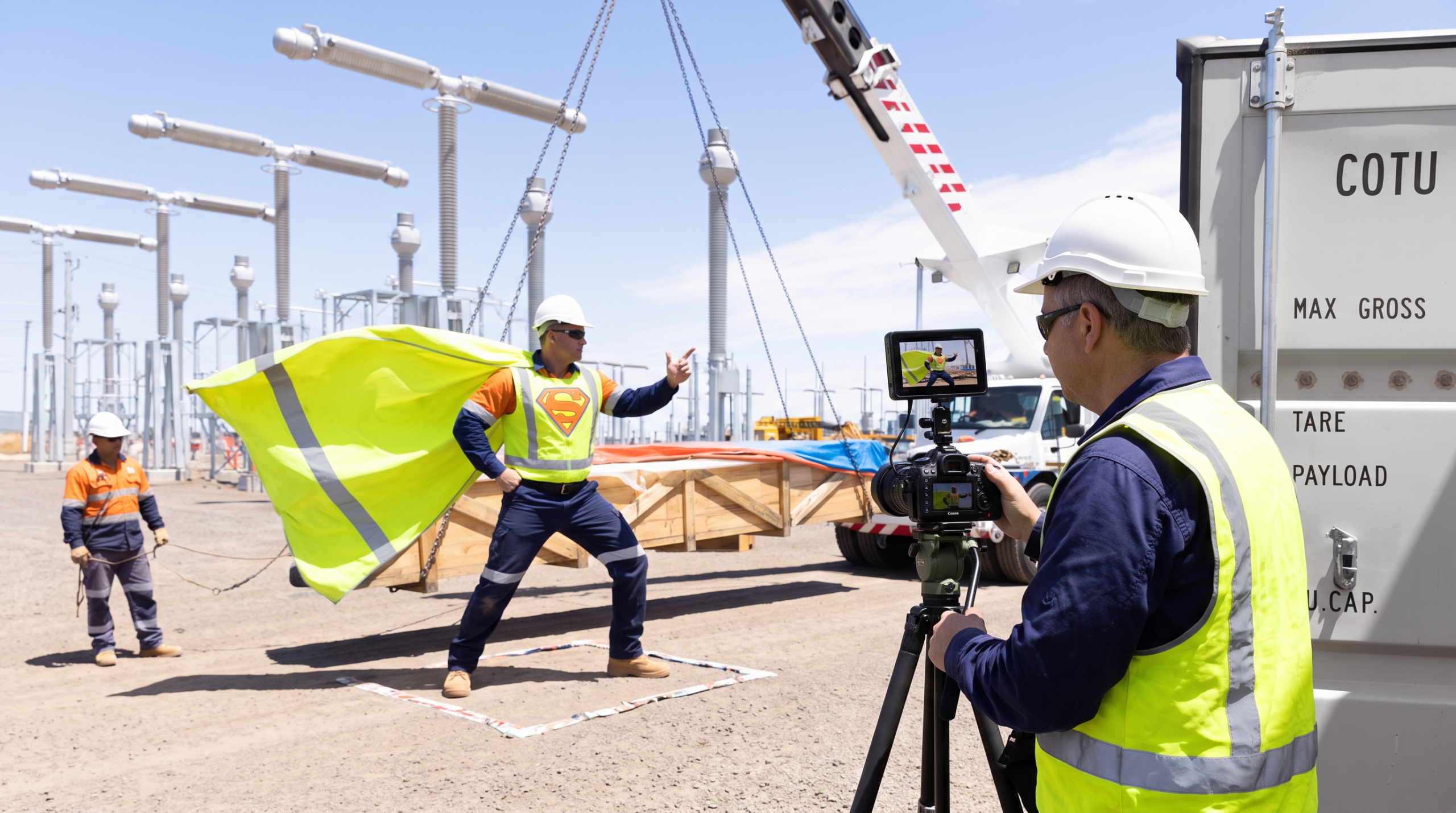
1. Workplace safety: Understanding the consequences
Example: A simulated courtroom following a serious workplace incident
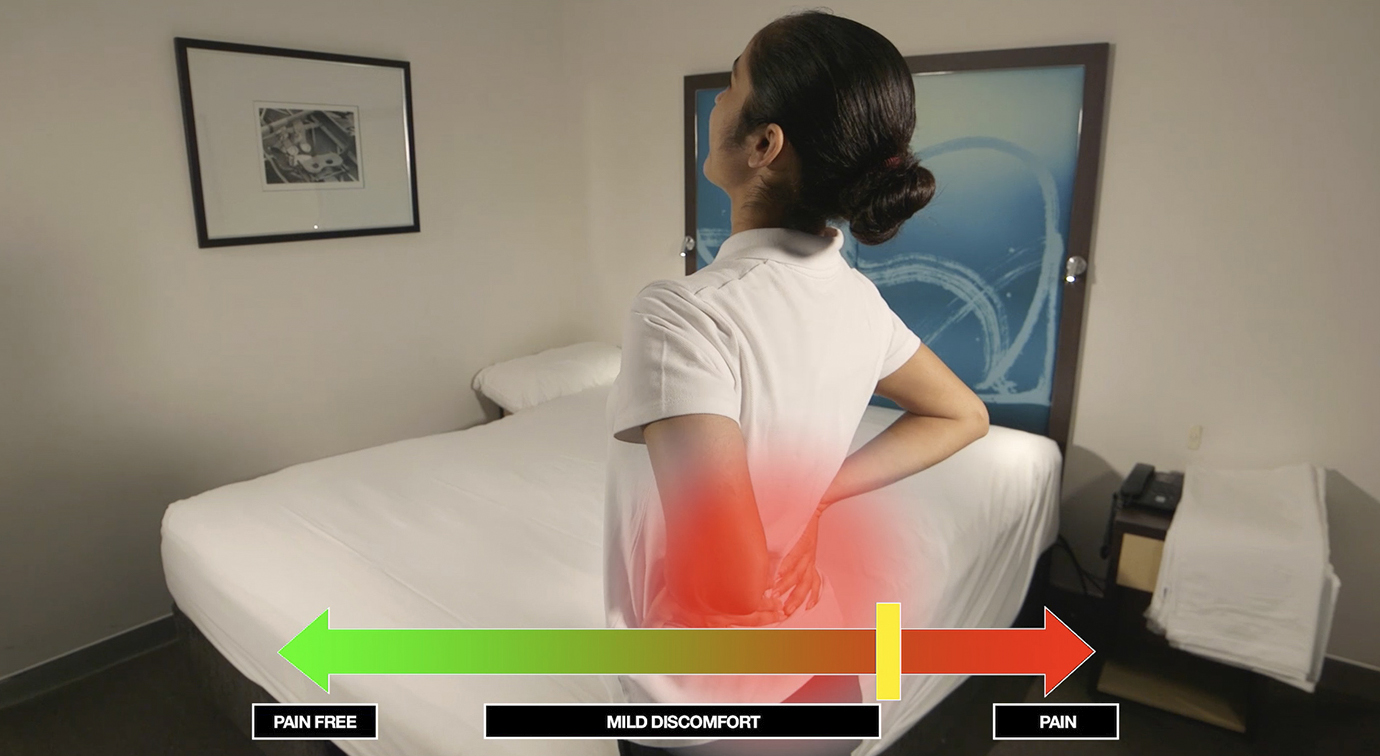
One powerful application of scenario-based training is demonstrating what can happen after a serious workplace accident.
In these productions, a workplace incident is reconstructed through a simulated legal proceeding, complete with a courtroom setting, questioning and different perspectives from the people involved.
The scenario might examine a serious injury or workplace fatality, exploring the decisions, responsibilities and circumstances leading up to the incident.
Rather than focusing only on the accident itself, the video examines what happens afterwards.
Managers, employees and other parties may be questioned about their actions, knowledge of safety procedures and the decisions they made.
This approach helps learners understand that workplace safety isn’t simply about following a checklist. Decisions made during everyday work can have serious consequences for individuals, colleagues and the organisation.
By seeing those consequences unfold in a realistic setting, participants can reflect on their own responsibilities and the importance of safe working practices.
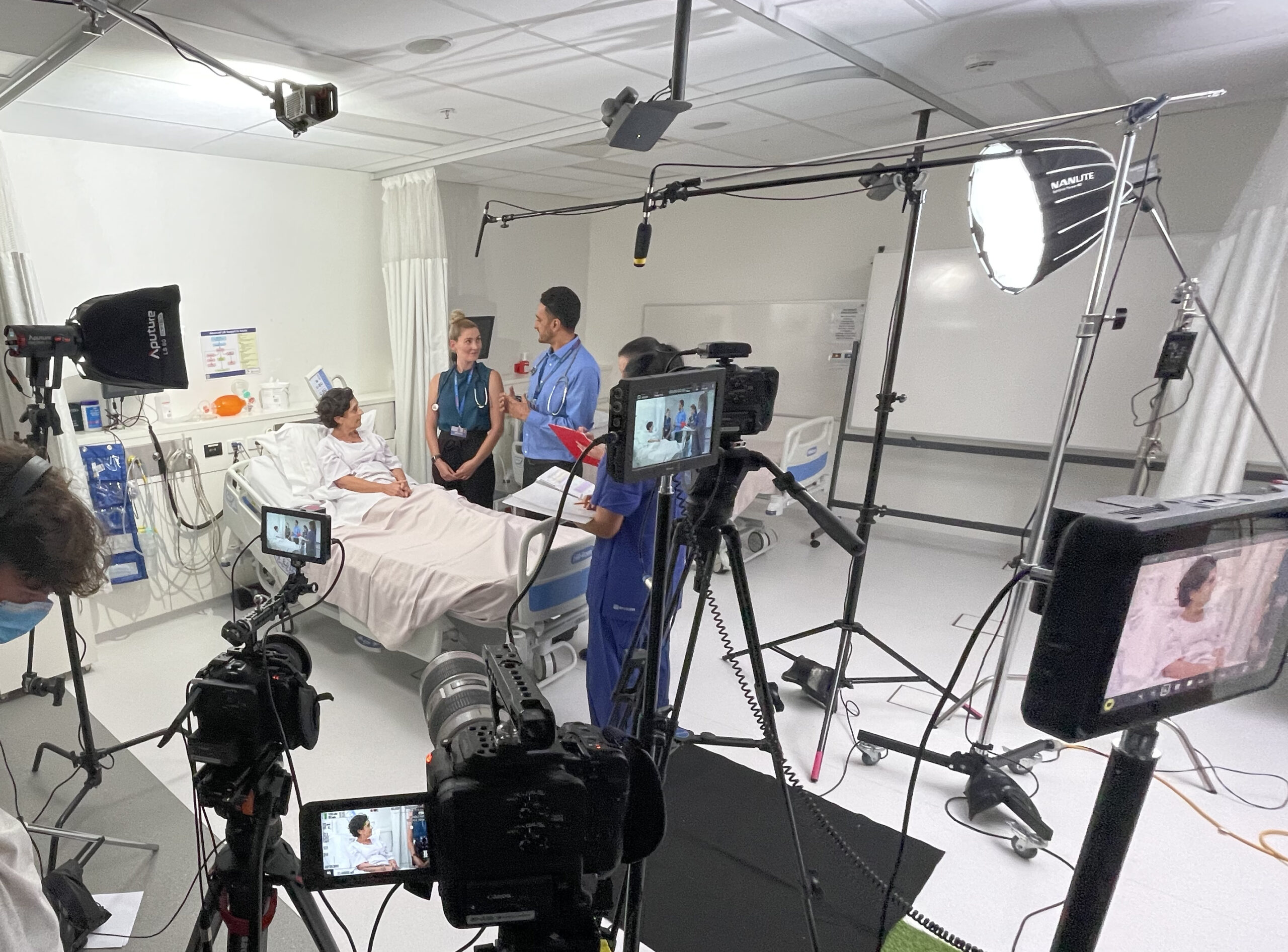
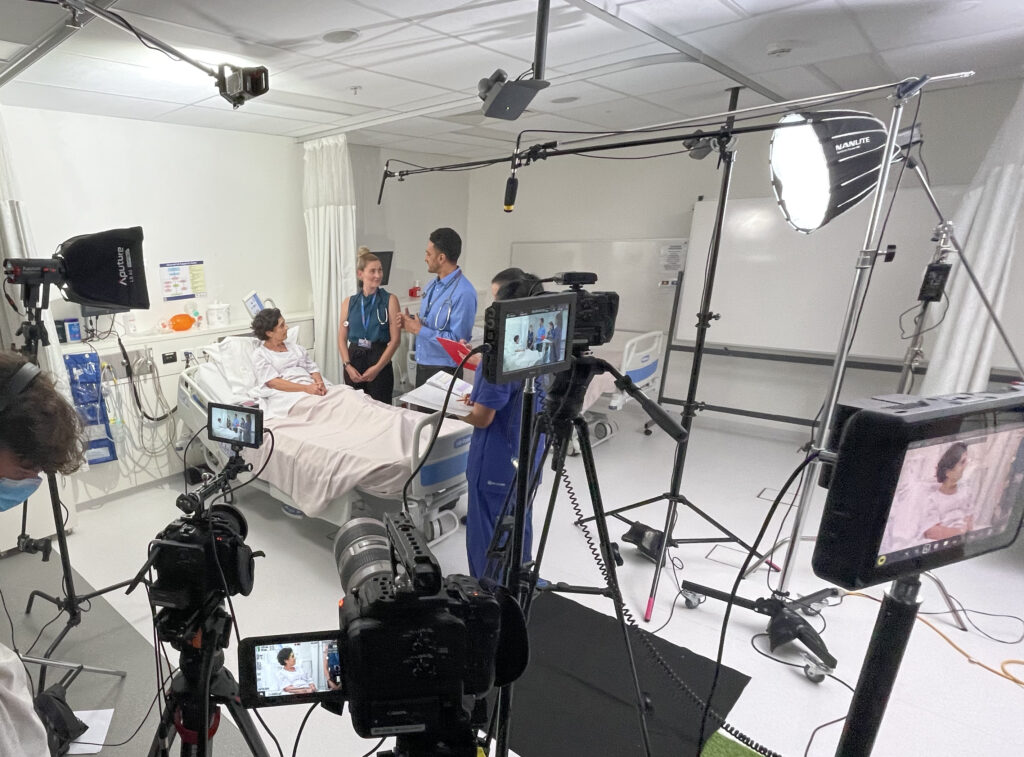
2. Healthcare: Demonstrating respectful professional interactions
Example: Communication between surgeons and surgical trainees
Not all scenario-based training involves an accident or an obvious breach of procedure.
Sometimes it’s about the way people interact.
Healthcare provides a particularly useful example. Surgical teams work in demanding environments where communication, professional respect and effective working relationships are essential.
Consider a scenario involving an experienced surgeon and a trainee.
The video might demonstrate a difficult interaction during a busy working day, where pressure, assumptions or communication styles create unnecessary tension.
It could then explore a more constructive approach, demonstrating how clear expectations, respectful feedback and consideration for different levels of experience can improve the interaction.
The value lies in showing the subtleties of communication: tone of voice, body language, timing and the way feedback is delivered.
These can be difficult to convey through written guidelines alone.
Scenario-based videos give learners an opportunity to observe these interactions from different perspectives and reflect on how their own behaviour affects colleagues.
They can also provide a useful starting point for facilitated discussions within professional development programs.
3. Retail: Preparing employees for difficult customer behaviour
Example: Managing aggression and challenging customer interactions
For employees working directly with the public, difficult customer interactions can arise unexpectedly.
Scenario-based training can help prepare staff for situations they may never have encountered before.
We’ve produced a series of retail training videos covering situations such as:
- A customer physically assaulting a staff member.
- An employee receiving a threatening telephone call.
- An intoxicated and disorderly customer behaving aggressively in-store.
For these productions, the scenarios were performed by team members rather than professional actors, helping recreate situations within a familiar working environment.
Each video demonstrated how a situation could develop and explored appropriate responses, including recognising warning signs, following workplace procedures, seeking assistance and prioritising personal safety.
For younger or less experienced retail employees in particular, these scenarios can help introduce situations they might otherwise feel unprepared to handle.
The videos don’t replace practical training or workplace safety procedures. They help employees recognise potential situations and understand the organisation’s expectations before they encounter them.
Why scenario-based training videos work
The real strength of scenario-based learning is that it gives people context.
A policy might tell employees what to do. A scenario helps them understand when, why and how that guidance applies.
They make abstract information more tangible.
Concepts such as professional respect, duty of care, safe decision-making and appropriate customer interactions become easier to understand when demonstrated through recognisable situations.
They show the consequences of decisions.
Learners can observe how a situation develops and how different choices may influence what happens next, without having to experience those consequences themselves.
They encourage discussion and reflection.
A scenario doesn’t always need to provide every answer. It can pause at a decision point and ask learners what they would do next, creating opportunities for group discussion or assessment.
They help prepare people for unfamiliar situations.
Employees can observe potentially difficult, stressful or unsafe situations in a controlled learning environment before encountering them at work.
They provide consistency.
A professionally produced scenario can be delivered across different teams, sites and locations, helping organisations communicate the same core messages and expectations.
Of course, a video alone doesn’t guarantee that someone will respond correctly in a real situation. Scenario-based videos are most useful when supported by appropriate instruction, discussion, practice and assessment.
How we produce scenario-based training videos
Every scenario begins with understanding what the organisation wants people to learn.
Sometimes our clients already have detailed scripts and clearly defined scenarios. Other times, they come to us with a workplace issue, a set of learning objectives or examples of situations their employees have experienced.
We can work with either approach.
Developing the scenario and script
Working alongside your learning, training or safety team, we help determine which situations are worth demonstrating and what learners should take away from them.
This might involve reviewing existing training materials, discussing real workplace experiences or developing scripts from an initial list of potential scenarios.
The script needs to be realistic, relevant and focused on the intended learning outcomes.
Casting and planning the production
Depending on the project, we can work with professional actors, your own employees or subject-matter experts.
Professional actors can be particularly useful when a scenario requires convincing emotional responses, difficult conversations or sensitive subject matter.
In other situations, internal team members or professionals with relevant experience may be more appropriate.
We then plan the locations, filming approach and supporting production requirements.
Filming and post-production
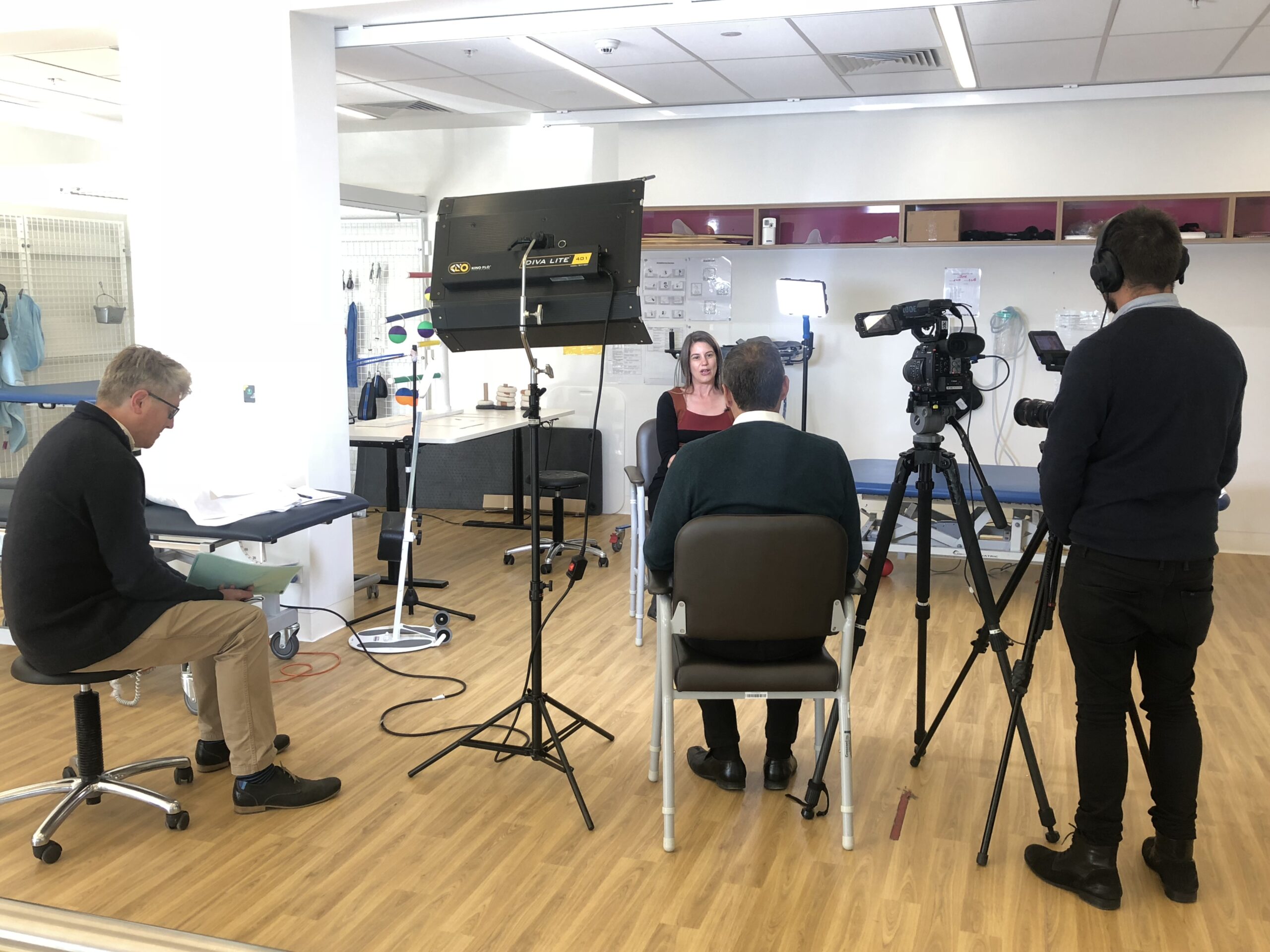
Our production team captures the scenarios using appropriate camera, lighting and sound techniques, with direction focused on creating believable interactions.
In post-production, we edit the performances, build the story and incorporate any required graphics, captions or supporting information.
A longer scenario can also be divided into shorter learning modules, allowing different parts of the story to be used at appropriate points within a training program.
Integrating the videos into your training
Scenario-based videos can be used within learning management systems, facilitated workshops, induction programs, safety training and professional development courses.
They might be presented as complete stories or broken into sections with questions, discussions or activities between each stage.
We work with your team to prepare the video content and deliverables to suit the way the training will be delivered.
Bringing workplace situations to life
The most effective scenario-based training videos aren’t necessarily the most dramatic.
They’re the ones that feel relevant to the people watching.
Whether it’s understanding the consequences of a workplace safety incident, improving communication between healthcare professionals or preparing retail employees for difficult customer interactions, realistic scenarios can help turn policies and expectations into something people can see, discuss and understand.
At Visual Culture, we work with learning, training and safety teams to develop and produce scenario-based videos, from initial concepts and scripts through to casting, filming and post-production.
Have a workplace situation that would be easier to demonstrate than explain? Let’s talk about how scenario-based video training could help.
FAQs — Scenario-Based Training Videos
1. What is scenario-based video training?
Scenario-based video training uses realistic workplace situations to demonstrate behaviours, decisions and potential consequences. Rather than simply explaining policies or procedures, these videos allow employees to observe situations, consider different responses and understand how training applies to their everyday work.
2. What are the benefits of scenario-based training videos?
Scenario-based training videos help employees understand complex situations, recognise potential risks and prepare for challenging workplace interactions. They can demonstrate appropriate behaviours, show the consequences of decisions and encourage discussion and reflection. They also provide a consistent training resource that can be used across multiple teams and locations.
3. What types of workplace situations are suitable for scenario-based training?
Scenario-based training can be used for workplace safety incidents, customer aggression, respectful workplace communication, conflict resolution, emergency responses and compliance training. It’s particularly useful when employees need to understand how to respond to situations involving people, decisions or potential risks.
4. Do scenario-based training videos require professional actors?
Not necessarily. Depending on the scenario, videos can feature professional actors, employees or subject-matter experts. Professional actors are often useful for sensitive situations or emotionally demanding performances, while employees can bring familiarity and authenticity to workplace demonstrations. The best approach depends on the training objectives, script and production requirements.
5. How do you develop and produce scenario-based training videos?
Production typically begins by identifying the workplace situation and intended learning outcomes. From there, the process may include researching scenarios, developing scripts, selecting actors or employees, planning locations, filming and editing. Finished videos can be delivered as standalone training resources or shorter modules for integration into learning management systems and other training programs.