Practical ways to capture your team’s expertise and prepare it for professional training and educational videos.
If you’re responsible for developing workplace training or learning materials, chances are you’ve worked with people who know their subject inside out.
They’re the experienced employees who understand how things really work, the supervisors who train new starters, or the technical specialists who can explain complicated information in a way that makes sense.
These people often hold valuable knowledge that doesn’t always make it into training manuals or course materials.
The practical details. The common mistakes. The questions people repeatedly ask. The lessons they’ve learned through years of experience.
When you’re planning a training or educational video, that knowledge can be incredibly valuable.
But there’s often a challenge.
How do you capture what these people know and turn it into information that can be used to develop professional video content?
The good news is that it doesn’t need to be complicated.
Your experts don’t need to write the video script
One of the things worth remembering when planning a video project is that your subject-matter experts don’t need to become scriptwriters.
They might be excellent at explaining a procedure, demonstrating a task or sharing specialist knowledge, but writing for video is a different skill.
And it’s not something they necessarily need to take on.
If you’ve already developed your learning objectives, course structure or training materials, you’re probably further along than you think.
The next step may simply be gathering the explanations, practical examples and demonstrations that will help bring that content to life.
Once the information has been collected, your video production team can help organise it, develop scripts where required and plan how best to communicate it visually.
Start with the information you already have
Before asking your experts to prepare anything new, take stock of the materials you’ve already developed.
You might have training manuals, learning modules, standard operating procedures, presentations, facilitator notes, product documentation or existing educational content.
These are all useful starting points.
They can help your video producer understand the subject, the intended audience and the information that needs to be communicated.
They can also highlight areas where additional input from your subject-matter experts would be valuable.
You don’t need to recreate everything specifically for video.
Six easy ways to capture expert knowledge
There’s no single right way to gather information from subject-matter experts.
Different people prefer different approaches, and often the simplest method is the most effective.
1. Record an informal conversation
Sit down with your expert and ask them to explain the subject in their own words.
Record the conversation, with their permission, and transcribe it afterwards. This can provide a useful written record without requiring the expert to prepare lengthy notes.
2. Record a video interview
Microsoft Teams, Zoom or a smartphone can be used to capture someone explaining a process or answering questions.
The recording doesn’t need to be professionally filmed if you’re simply using it to gather information.
3. Ask for voice notes
For busy experts, short voice recordings can be an easy way to capture explanations, practical tips or answers to specific questions.
4. Collect written information
Existing procedures, presentations, notes and written responses can all contribute to the content development process.
5. Film a simple demonstration
If you’re explaining a practical task, a smartphone recording of an approved demonstration can help show the sequence of actions and important details that may need to appear in the finished video.
6. Gather photos, diagrams and screenshots
Visual references can be particularly useful for explaining equipment, processes, products or technical information.
They can also help your production team understand what needs to be filmed or illustrated.
A practical approach is to combine several of these methods. For example, a recorded conversation, a transcript and an existing training document can provide a useful starting point.
Remember to obtain permission before recording people, follow your organisation’s privacy and information-security requirements, and check automated transcripts for accuracy.
Bringing together knowledge from multiple experts
Sometimes the best approach isn’t to rely on one person to explain everything.
We worked on a professional development course where the lead subject-matter expert developed the course structure and learning materials, drawing on knowledge from several other specialists.
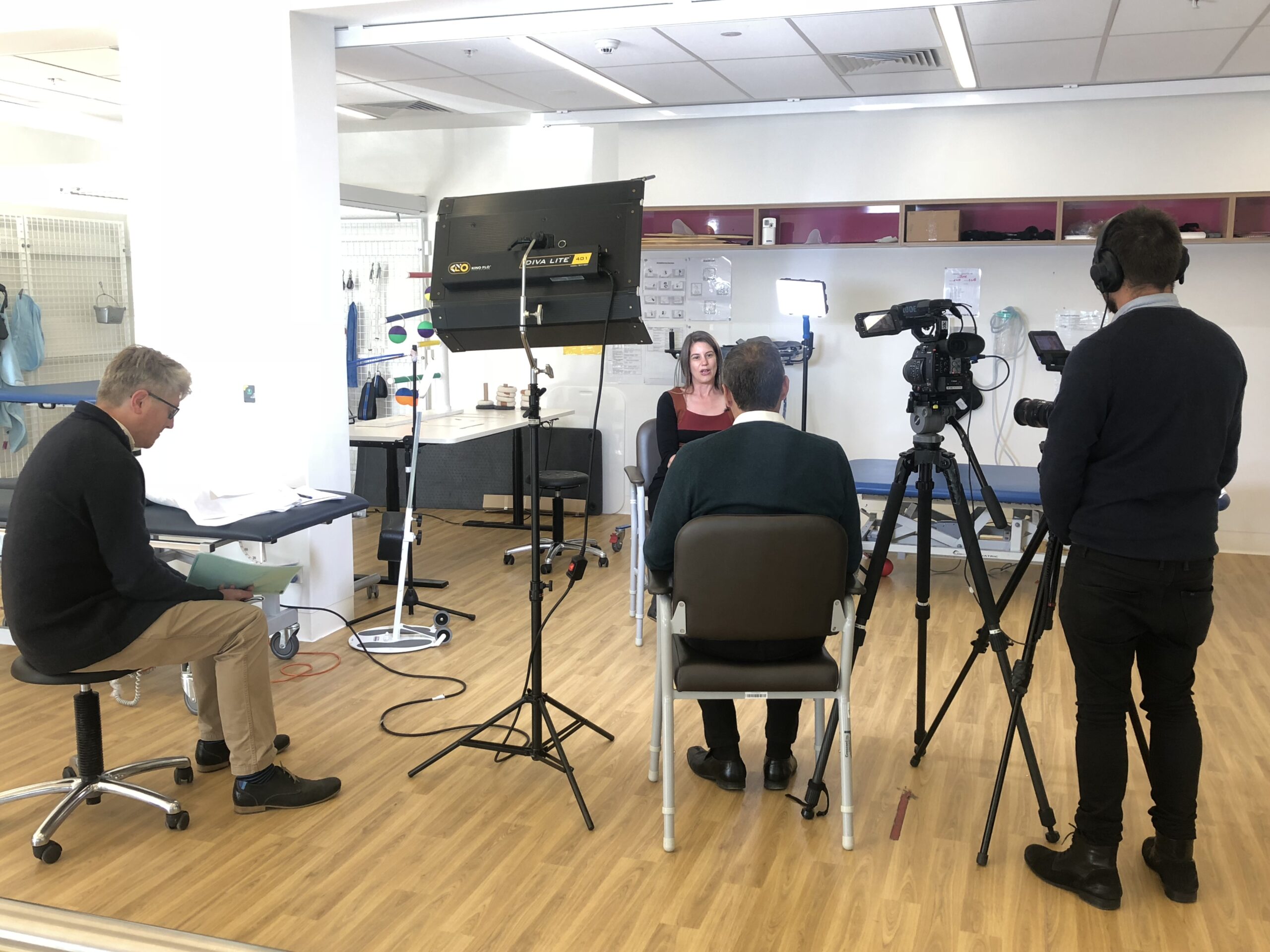
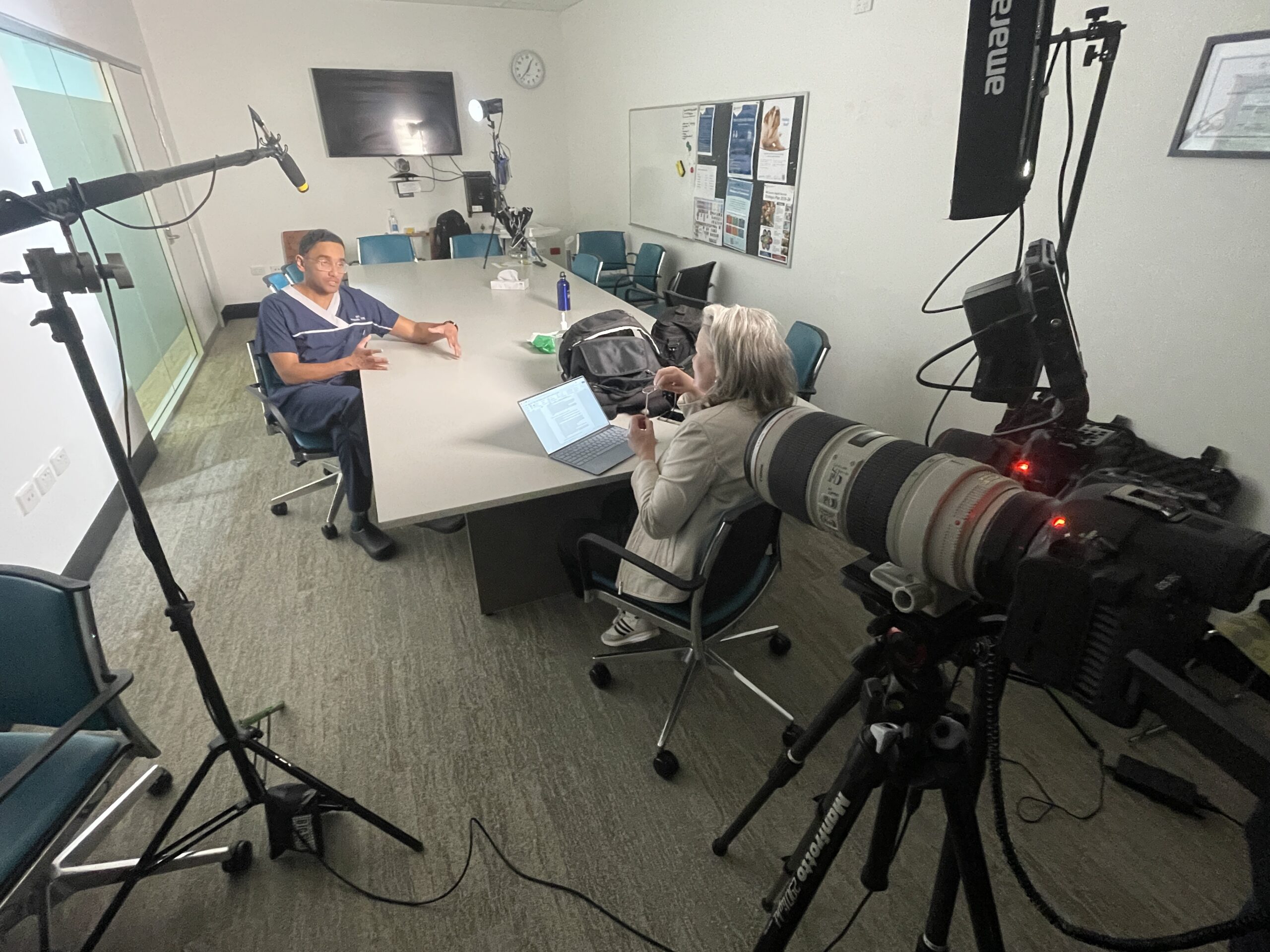
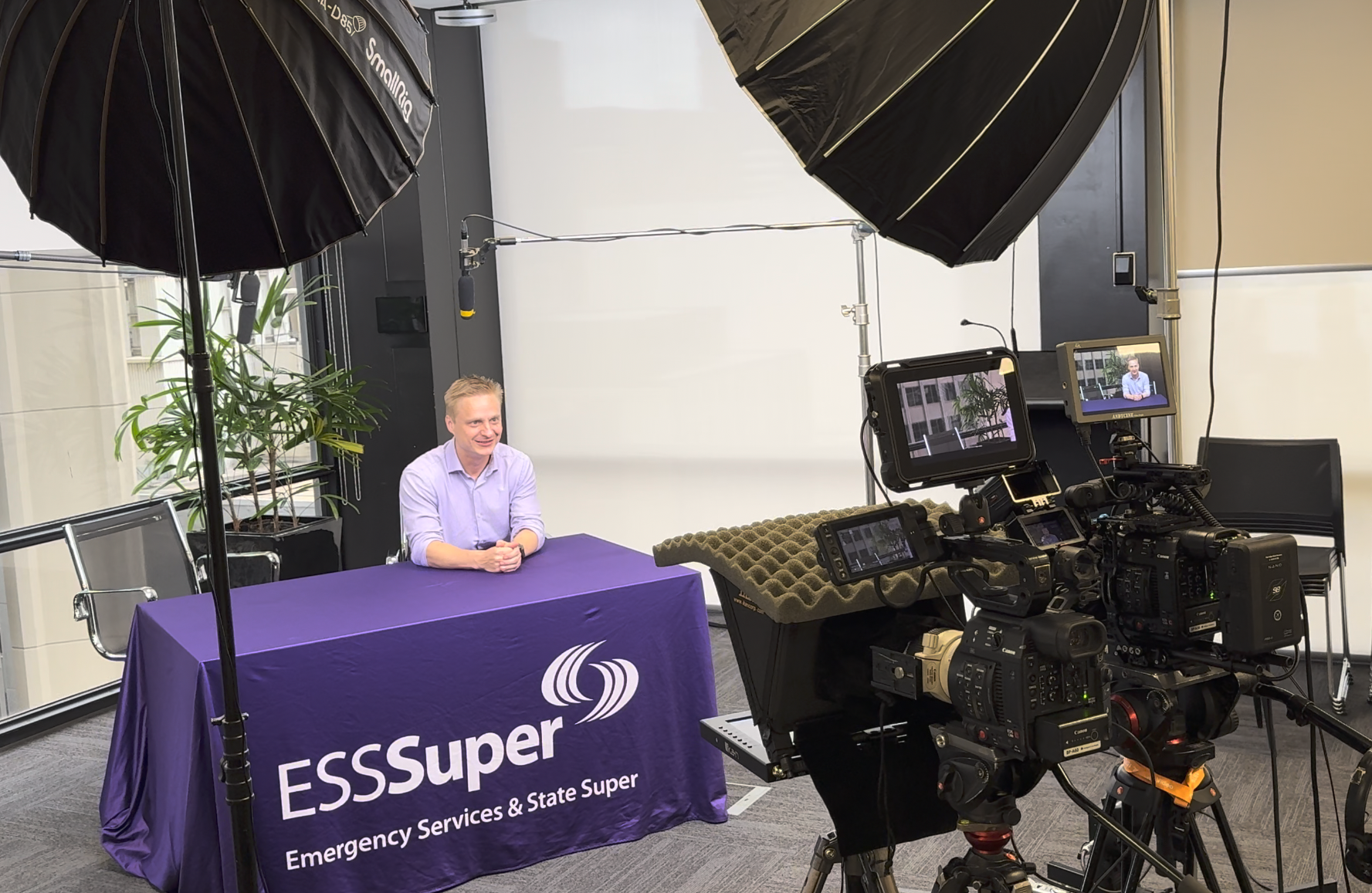
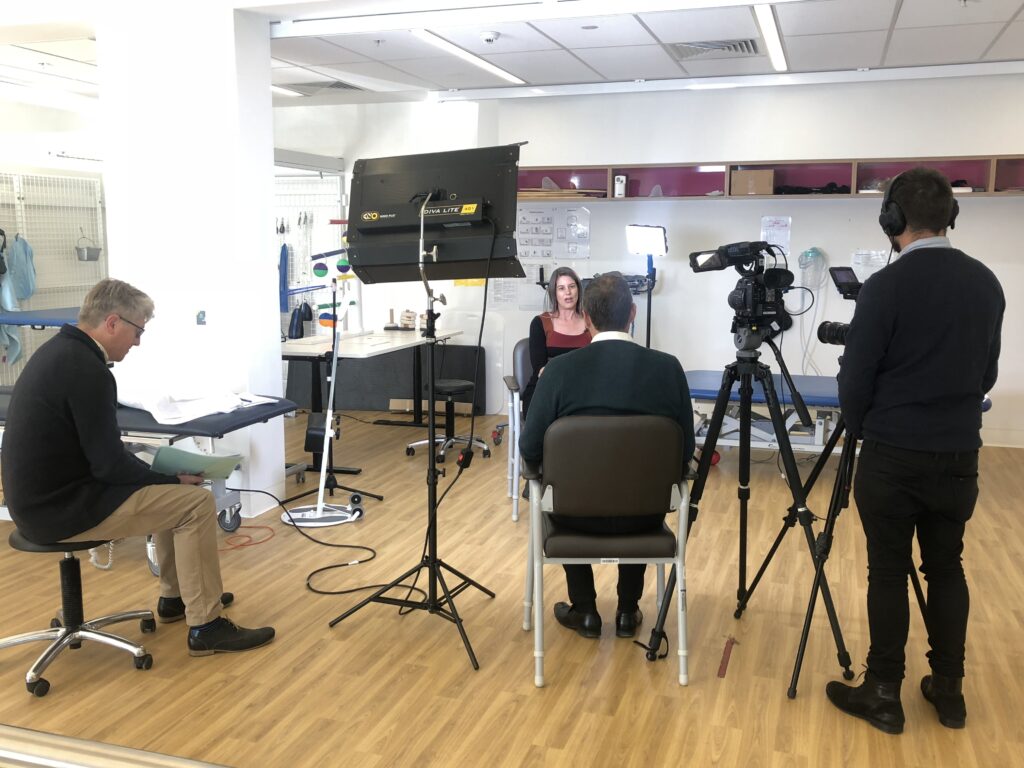
Our role included professionally filming interviews with those specialists. We then selected relevant sections from the interviews and incorporated them into different modules throughout the finished course.
Rather than creating a separate video for every interview, the course could draw on different experts at the points where their knowledge was most relevant.
It’s a useful example of how expert interviews can serve different purposes.
Sometimes an informal conversation is simply a way to gather information before writing a script. Other times, professionally filmed interviews become part of the finished learning content.
The important thing is to consider what knowledge you need, who can provide it and how it might best support your learning objectives.
Ask questions that reveal practical experience
If you’re gathering information from an expert, you don’t need a complicated questionnaire.
A few straightforward questions can help uncover useful explanations and examples.
For instance:
- Can you walk me through the process from start to finish?
- What are the most important things someone needs to understand?
- What mistakes do people commonly make?
- What questions do learners regularly ask?
- What would you demonstrate if you were teaching someone in person?
That last question is particularly helpful when planning video content.
A written procedure might explain what someone needs to do, but a demonstration can reveal the details that viewers actually need to see.
It might be a close-up of a particular component, the correct sequence of actions or a small but important detail that’s difficult to communicate in writing.
Identifying these opportunities early can help your video producer plan the filming.
You don’t need to include everything
Your subject-matter experts might have decades of experience, but not everything they know needs to appear in your videos.
If you’re working in learning and development, you’ve probably already considered your audience, learning objectives and the outcomes you’re trying to achieve.
These provide a useful framework for deciding which information belongs in the video.
Some details might be better suited to supporting documents, facilitator-led activities or separate learning modules.
Your video producer can help you work through how best to present the information visually, whether that’s through demonstrations, expert interviews, narration, graphics or a combination of approaches.
What should you provide to your video producer?
You don’t need to prepare a perfectly organised production package before getting in touch.
A shared folder containing relevant training documents, course outlines, expert recordings, transcripts, diagrams and visual references can be a great starting point.
It’s also helpful to share your intended audience, learning objectives, any existing scripts or content outlines, and the people responsible for reviewing and approving the information.
For technical, safety or regulated subjects, your organisation’s appropriate experts should verify the content against approved procedures and requirements.
From there, your video producer can help identify what information is needed, plan interviews or demonstrations, develop scripts where required and work out how the material can be presented effectively on screen.
Making the process straightforward
At Visual Culture, we work with organisations to turn specialist knowledge, workplace procedures and learning materials into clear, engaging video content.
Some clients come to us with detailed course structures, scripts and supporting materials. Others have learning objectives, a few knowledgeable people and an idea of what they want to achieve.
Both are perfectly reasonable starting points.
Our role is to help you work through the production process, gather or organise the information where needed, and bring the content to life through video.
You don’t need to know how to plan camera shots, write a video script or organise a professional shoot before contacting us.
That’s what we’re here to help with.
Need help getting started?
If you’re already planning a project, our Video Production Brief is an easy way to share your ideas and requirements with us.
You don’t need to have everything worked out before starting the conversation.