Recently, I needed to complete more than 100 pages of safety training so I could take a podcast kit up in a goods lift.
It sounds slightly ridiculous when you put it like that.
But the experience raised a serious question: are we designing contractor inductions around the people actually doing the work, or simply around the need to demonstrate that an induction has been completed?
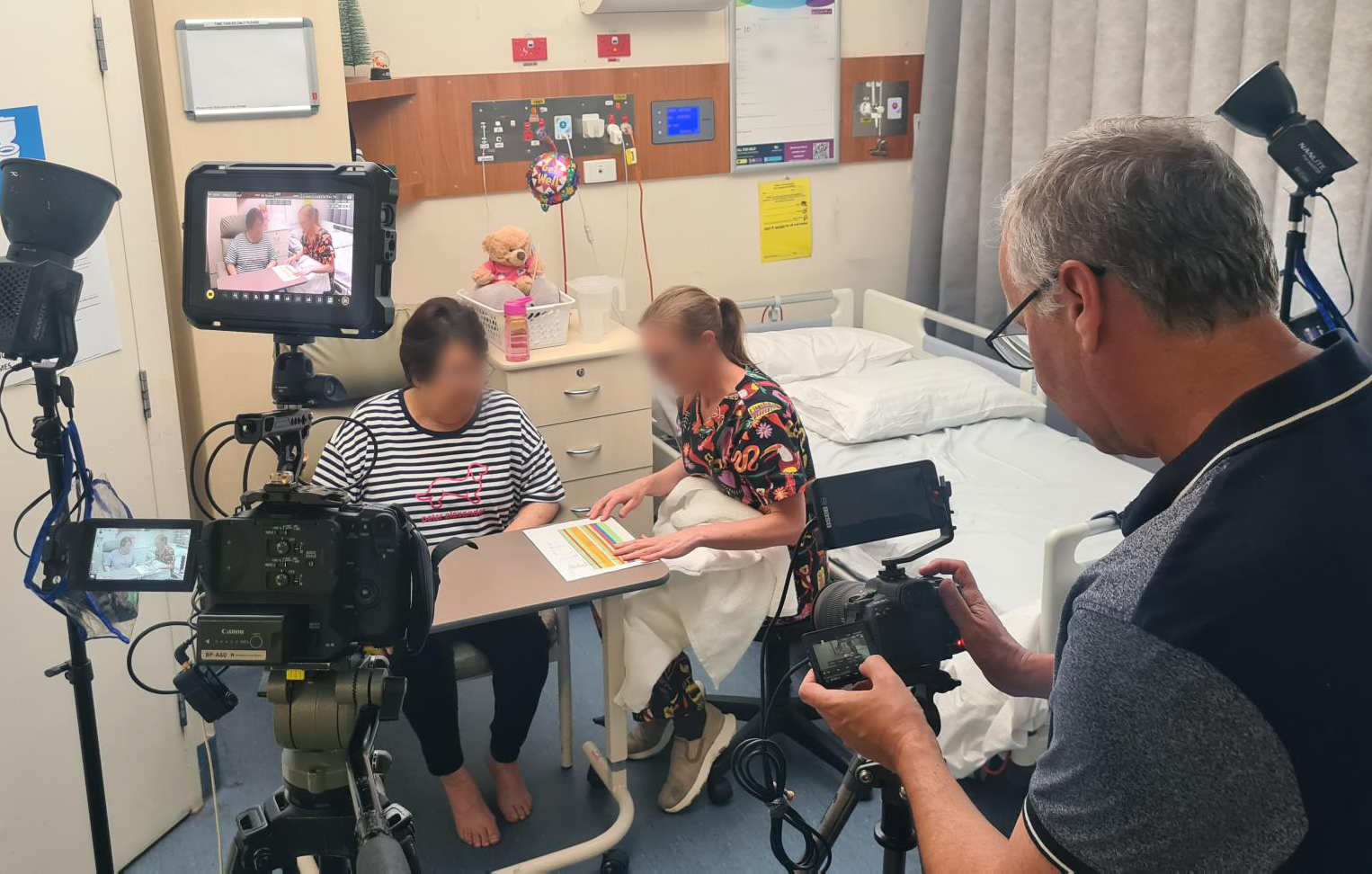
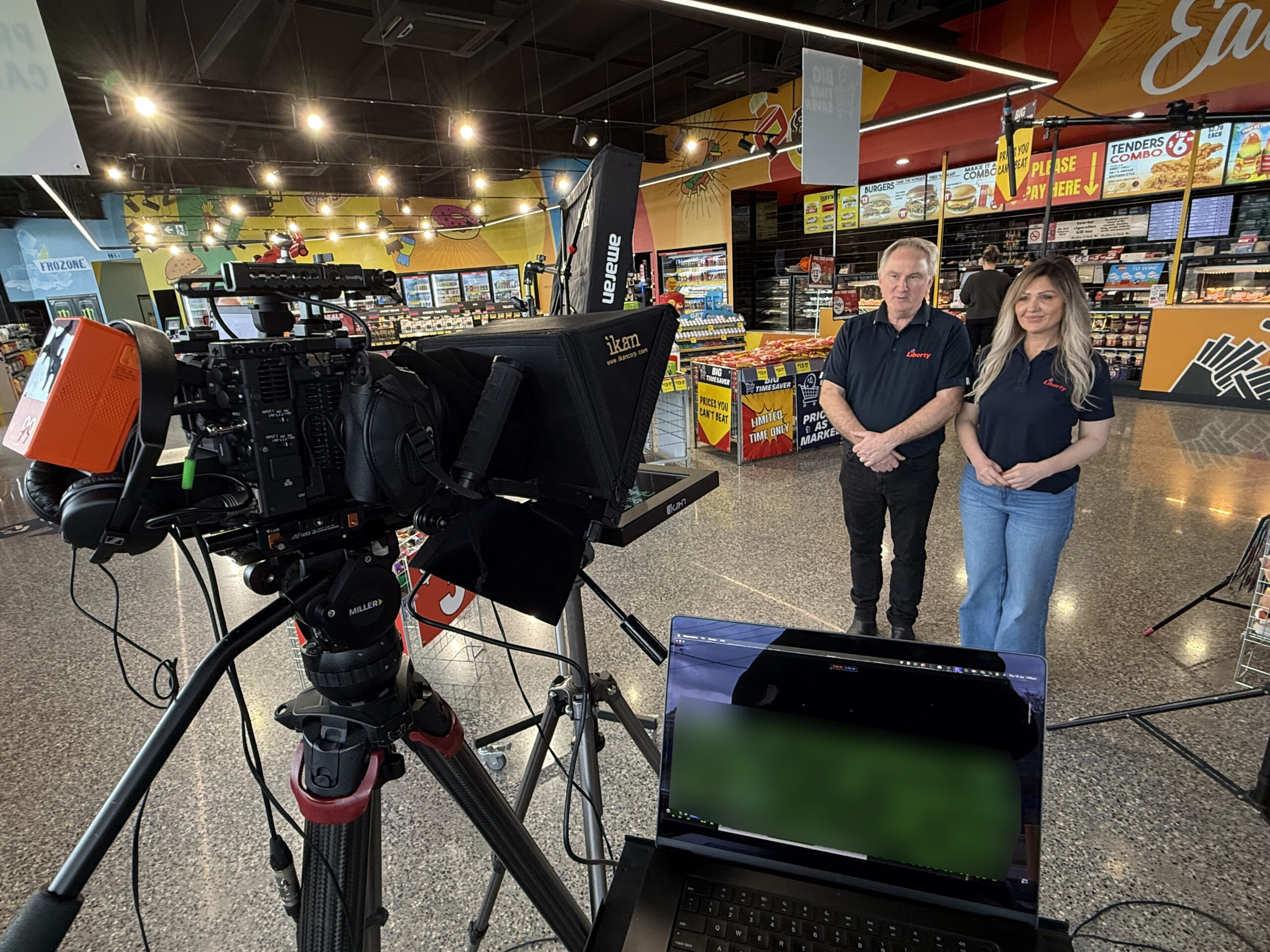
As a video producer, I’ve produced induction and onboarding videos for sites across Australia. I understand why inductions are important, and I’m certainly not suggesting we should remove information simply to make life easier for contractors.
Quite the opposite.
If information is important enough to include in an induction, surely we should be doing everything we can to make sure people actually engage with it, understand it and know what to do when it matters.
And that was what got me thinking about my own recent experience.
More than 100 pages for a podcast recording
I regularly work with a client based in a city building and, as a contractor, I’m required to complete the building induction every 12 months to maintain access.
On this particular visit, I was there to record a podcast.
My equipment consisted of a backpack and a larger bag containing a completely battery-operated podcast setup.
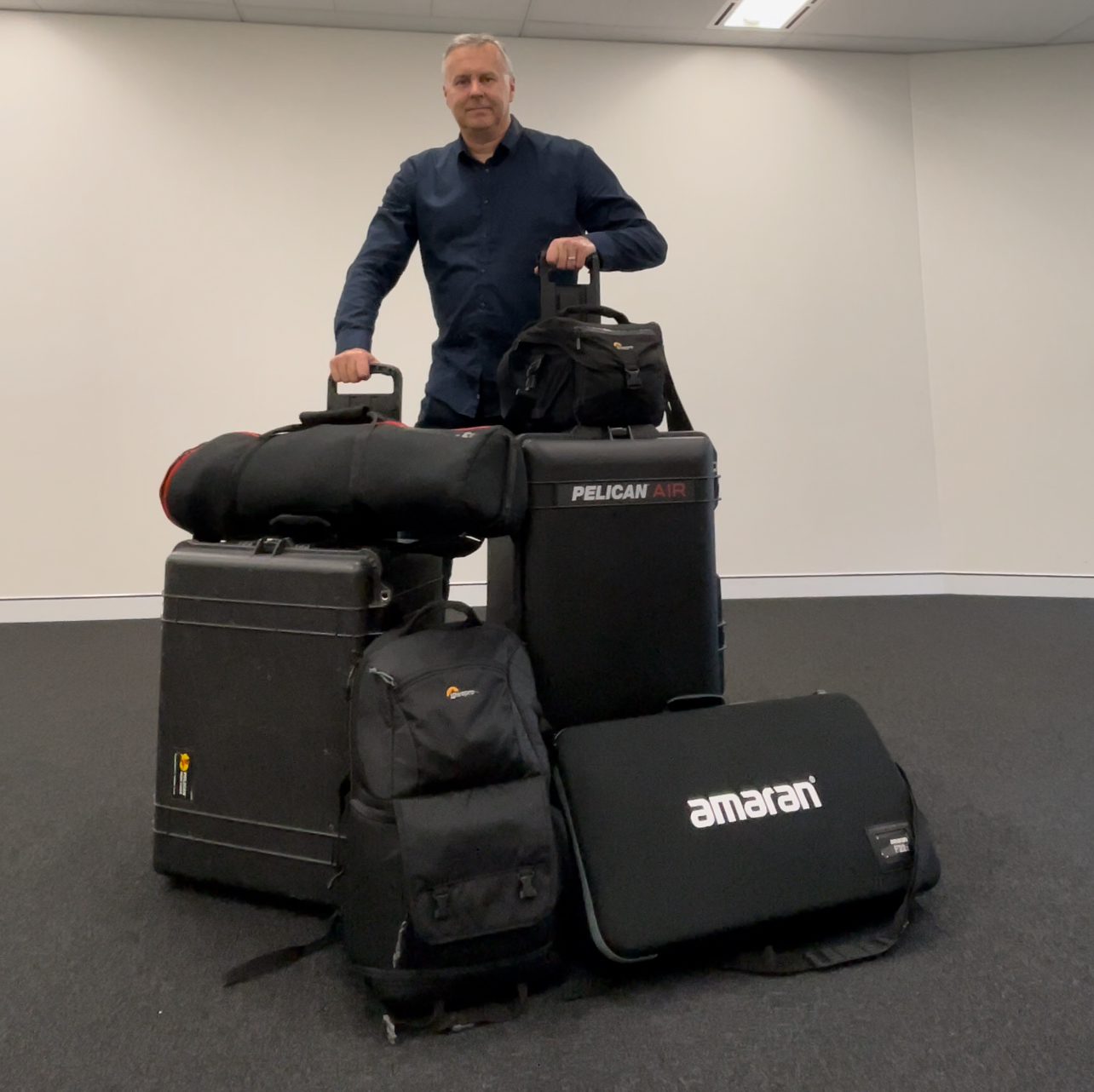
In fact, that’s about the smallest creative kit I take to a client location. On video productions I’ll often arrive with a trolley loaded with cameras, lighting, tripods, audio equipment and other production gear, which means using loading areas and goods lifts to move equipment safely through a building.
There are absolutely things I need to know.
Where can I unload? Which entrances should contractors use? How do I access the goods lift? Are there areas where equipment cannot be left? What are the emergency and evacuation procedures? What do I do if there’s an incident? Who do I contact if I need assistance?
All of that is relevant.
But before this particular job, I paid a small induction fee and worked my way through six text-based courses containing more than 100 pages of information.
There was repeated information between modules. There was no video, little or no interactivity and no real verification that I had understood what I’d read.
More importantly, the induction didn’t change according to what I was actually going to be doing in the building.
As a result, I was reading information covering activities such as hot works and hazardous substances – important topics for the contractors performing those tasks, but far removed from recording a podcast with battery-operated equipment.
It made me wonder whether there’s a better way.
Start with a simple question: what are you here to do?
Rather than every contractor automatically following the same pathway, what if an induction started by establishing the contractor’s role, the work they’re performing and the risks associated with it?
For example:
What type of work are you here to perform?
A video producer or photographer could receive one pathway. An electrician another. A cleaner, caterer, IT technician, construction worker or maintenance contractor could each receive information appropriate to their work.
There would still be a core induction that everybody completes.
Emergency and evacuation procedures, building access, incident reporting, prohibited activities, security requirements and other genuinely universal information should obviously be communicated to everyone.
But from there, the induction could branch.
A contractor undertaking hot works needs detailed information about hot work procedures and permits.
Someone handling hazardous substances needs the relevant chemical and storage requirements.
And a video producer wheeling cameras and lighting equipment through the building may need more detailed information about loading docks, goods lifts, equipment movement, trip hazards, electrical requirements and restricted areas.
The objective isn’t necessarily to make the induction shorter.
It’s to make it more relevant.
Relevance creates engagement
This is where I think the distinction between compliance and genuine learning becomes important.
It’s relatively easy to demonstrate that someone has opened a module, scrolled through a document or clicked a button confirming they’ve completed an induction.
But did they engage with it?
Did they understand it?
And, perhaps most importantly, will they know what to do when something actually happens?
When someone is faced with a large volume of information that clearly doesn’t relate to their role, there’s a risk that the important information becomes lost amongst everything else.
The challenge isn’t simply delivering information.
It’s getting people to pay attention to the right information.
That’s why I believe relevance should be one of the fundamental principles of induction design.
Video can help – but video isn’t the whole solution
As someone who produces induction and onboarding videos, I obviously see enormous value in video.
A two-minute video can show someone exactly where to enter a site, where the assembly area is, how to access a loading dock or goods lift, what an exclusion zone looks like, or what they should do in an emergency.
For many topics, seeing something demonstrated can be much easier to absorb than reading several pages describing it.
But simply converting 100 pages of text into a very long video isn’t necessarily an improvement.
Good induction design should use the right format for the right information.
That might include short videos, simple text, diagrams, photographs, animations, interactive scenarios and questions.
The goal should be communication and understanding – not choosing one medium for everything.
Think microlearning, not information overload
Another opportunity is to break induction content into smaller, focused modules.
Instead of asking a contractor to absorb everything about a building or site in one sitting, information can be delivered in short sections dealing with specific topics.
For example, a contractor might complete a short core induction followed by three or four modules relevant to their work.
A video producer’s pathway might include:
- General building and emergency procedures
- Contractor access and security
- Loading dock and goods lift procedures
- Moving and setting up production equipment
- Electrical and equipment safety
- Incident reporting
Someone performing a completely different task would receive a different combination.
Shorter doesn’t mean less rigorous.
Done properly, microlearning can simply remove irrelevant information and give the important information more room to stand out.
Make the contractor participate
Interactivity can also turn an induction from a passive reading exercise into something that requires the contractor to think.
It doesn’t need to be complicated.
Show a photograph and ask someone to identify the correct assembly point.
Present a short scenario: You’re moving equipment through the building and discover the goods lift isn’t available. What should you do?
After an emergency procedure video, ask two or three questions to confirm the key information was understood.
For higher-risk activities, the questions and scenarios can become more detailed.
This creates an important distinction.
Completion tells us someone went through the induction. Verification tells us whether they understood it.
If the objective is safety, the second measure arguably tells us much more.
What happens when AI enters the induction process?
This is where things become particularly interesting.
We now have technology capable of personalising information at a scale that would have been difficult or expensive only a few years ago.
Imagine starting an induction with a handful of questions:
What is your occupation?
What work are you performing today?
What equipment are you bringing on site?
Will you be working alone?
Are you performing any high-risk activities?
Which areas of the building will you need to access?
Based on those answers, an induction platform could create an appropriate pathway using approved content.
A photographer arriving with a camera and tripod could receive one induction.
A production crew arriving with several trolleys of cameras, lighting equipment and cables could receive additional information about loading access, goods lifts, equipment movement, electrical safety and trip hazards.
A contractor performing hot works could automatically receive a much more extensive pathway covering permits, fire controls and the site’s specific procedures.
Importantly, AI doesn’t need to be responsible for inventing safety information.
The underlying information can remain approved and controlled by the organisation’s safety, facilities and compliance teams. AI could instead help determine which approved information is relevant to which person and how it is presented.
That distinction matters.
Do we need to repeat everything every 12 months?
There’s another question my experience raised.
If I’m returning to the same building year after year, working for the same client and performing essentially the same type of work, should my annual re-induction always be identical?
Some information absolutely warrants refreshing regularly.
But perhaps an annual re-induction could begin with:
What’s changed?
If emergency procedures, building access, loading dock requirements or contractor policies have changed, highlight those changes.
Then verify the contractor’s understanding of the critical information that hasn’t changed.
A returning contractor might receive a targeted refresher rather than simply repeating the entire original induction.
Again, the goal shouldn’t be to reduce safety requirements.
It should be to make the time spent on induction more valuable.
Compliance or genuine learning?
Organisations understandably need to demonstrate that contractors have received appropriate information and training.
Records matter. Completion dates matter. Policies matter. Compliance matters.
But the process can potentially satisfy all of those requirements and still fail as communication.
A contractor can click through 100 pages and retain very little.
Another contractor might watch several relevant two-minute videos, interact with a few realistic scenarios and correctly answer questions demonstrating that they’ve understood the key information.
Which person is better prepared to enter the site?
That’s the question I think organisations should be asking.
The best induction system shouldn’t force us to choose between compliance and engagement.
It should deliver both.
Designing inductions around people, not documents
My podcast recording was a very low-risk example, but that’s exactly why it made me think about the broader issue.
Contractors aren’t one homogeneous group.
Their work, equipment, access requirements and risk profiles can be completely different.
Yet many induction systems still treat them as though they’re all doing essentially the same thing.
Technology now gives us the opportunity to rethink that approach.
Role-based pathways can make information more relevant.
Microlearning can make it easier to absorb.
Video can show rather than simply tell.
Interactive modules can encourage participation.
Questions and scenarios can verify understanding.
AI-assisted customisation could help deliver the right approved content to the right contractor.
And smarter refresher inductions could concentrate on what has changed and what someone genuinely needs to know again.
None of this means compromising safety.
In fact, I think the objective is exactly the opposite.
If information is genuinely important, we should design the induction so people want to engage with it, understand why it’s relevant to them, and can recall what they need to do when it matters.
Perhaps the question isn’t:
“Has this contractor completed the induction?”
Perhaps we should also be asking:
“Did we give this contractor the information they actually need — and do we know they understood it?”
That’s a much more interesting measure of a successful induction.