The people who know your business best are your own team.
They know how things work. They understand the processes, the shortcuts to avoid, the safety considerations and the small details that can take years of experience to learn.
The challenge is sharing that knowledge.
Traditionally, organisations have relied on face-to-face training, written procedures, manuals, PDFs and presentations. All have their place, but when you’re teaching someone how to do something, being able to see the process demonstrated can make an enormous difference.
That’s where training and demonstration videos become particularly valuable.
Instead of asking an experienced team member to explain the same process each time someone needs to learn it, you can capture that knowledge once and make it available whenever and wherever it’s required.
For organisations involved in learning, training and education, video can become a valuable and continually accessible knowledge resource.
Show the process, don’t just describe it
Think about the difference between reading instructions explaining how to perform a task and actually watching an experienced person do it.
A written procedure might say:
“Position the component correctly and secure it before continuing.”
But what does “correctly” actually look like?
Video can show the viewer exactly where the component goes, how it should be positioned, which tool should be used and what the finished result should look like.
The same principle applies across an enormous range of industries and applications.
Training videos can demonstrate workplace safety procedures, equipment operation, customer service processes, food preparation, recipes, product demonstrations, software workflows, property handovers, maintenance procedures, staff onboarding and volunteer training.
Wherever there’s a process that needs to be explained consistently, there’s an opportunity to demonstrate it visually.
Capture your team’s knowledge once
One of the biggest advantages of training video is repeatability.
Experienced team members can spend a significant amount of time training new employees, contractors, customers or volunteers. And each time that training is delivered, it may be slightly different depending on who’s providing it.
Video allows you to capture your organisation’s preferred process and make that same demonstration available to everyone.
The trainer doesn’t need to be available every time someone needs the information.
A new employee can watch the training during onboarding. An existing team member can revisit a particular procedure six months later. Someone working at another location can access exactly the same demonstration.
Your team’s knowledge becomes an organisational resource rather than something that exists only in the heads of individual people.
Reduce the cost of repeat training
There’s also an important commercial benefit.
Face-to-face training requires someone’s time every time it is delivered.
For organisations with multiple locations, high staff turnover, seasonal employees or large volunteer workforces, those hours can quickly add up. There may also be travel, accommodation, venue and administration costs associated with delivering training across different locations.
Video doesn’t necessarily replace hands-on or face-to-face training – and in many situations it shouldn’t.
Instead, it can make that training considerably more efficient.
The foundational information can be delivered through video before a practical session. New team members can arrive with an understanding of the process. Trainers can spend their valuable face-to-face time answering questions, assessing competency and concentrating on the areas where personal instruction really matters.
The same video can then continue working for your organisation across hundreds or potentially thousands of views.
Make training available when people actually need it
Training isn’t only about onboarding.
People forget things.
Someone may have completed their initial training months ago but only occasionally performs a particular task. Rather than finding a manual – or finding the person who originally trained them—they can revisit a short demonstration video.
This is particularly useful when training content is divided into focused modules.
Instead of creating one long training program, a series of concise videos can address individual tasks or topics. Team members can find the specific information they need and watch it on a computer, tablet or mobile device.
That turns your training library into an on-demand resource.
Consistency matters
If five different people deliver the same training, there’s a good chance you’ll hear five slightly different versions.
Sometimes those differences don’t matter. Sometimes they do.
For operational processes, customer experiences, product preparation or workplace procedures, consistency can be extremely important.
A carefully planned demonstration video allows the organisation to decide what the correct process is before it is communicated more widely.
The script can be reviewed by subject matter experts, operations teams and other stakeholders. The demonstration can then be filmed and refined before the final resource is released.
Everyone receives the same core information, presented in the same way.
Your own people can be your best presenters
Training content doesn’t necessarily need actors.
In many cases, the most credible person to demonstrate a process is someone who actually performs it.
Featuring your own employees, trainers or subject matter experts can make training feel more authentic and relevant to the people watching it.
Not everyone needs to be comfortable presenting directly to camera either.
Depending on the subject, we can film your team demonstrating the process and add narration afterwards. This can be particularly useful for detailed step-by-step demonstrations because it allows the wording to be refined after filming.
If a process changes slightly during production – or your subject matter expert demonstrates a better way of explaining something – the narration can be adjusted without necessarily needing to film the entire sequence again.
Turning your team’s expertise into a training video
So how do we take the knowledge inside an organisation and turn it into an effective video series?
It’s a collaborative process from day one.
1. Understand what people need to learn
We begin with a creative briefing or discovery session to understand your organisation, your audience and the learning objectives.
Who will be watching?
What do they already know?
What should they be able to understand or do after watching?
These conversations also help identify which topics are best suited to video and how the content might be divided into individual modules.
2. Map out the process
You don’t need to arrive with finished scripts.
We work with your team and subject matter experts to map each process into a clear, step-by-step summary.
This is an important part of production because it turns internal knowledge – which may feel obvious to an experienced employee – into something that can be understood by someone encountering the process for the first time.
3. Develop the script and visual plan
Once the steps are agreed, we refine them into a script accompanied by visual scene guides.
We’re not simply asking, “What should we say?”
We’re also asking, “What does the viewer need to see while we’re saying it?”
This allows everyone involved to understand what will be captured before filming begins.
We can identify presenters, locations, equipment, products and props in advance and develop a detailed filming schedule.
Good pre-production makes filming considerably more efficient and ensures we’re respectful of your team’s time.
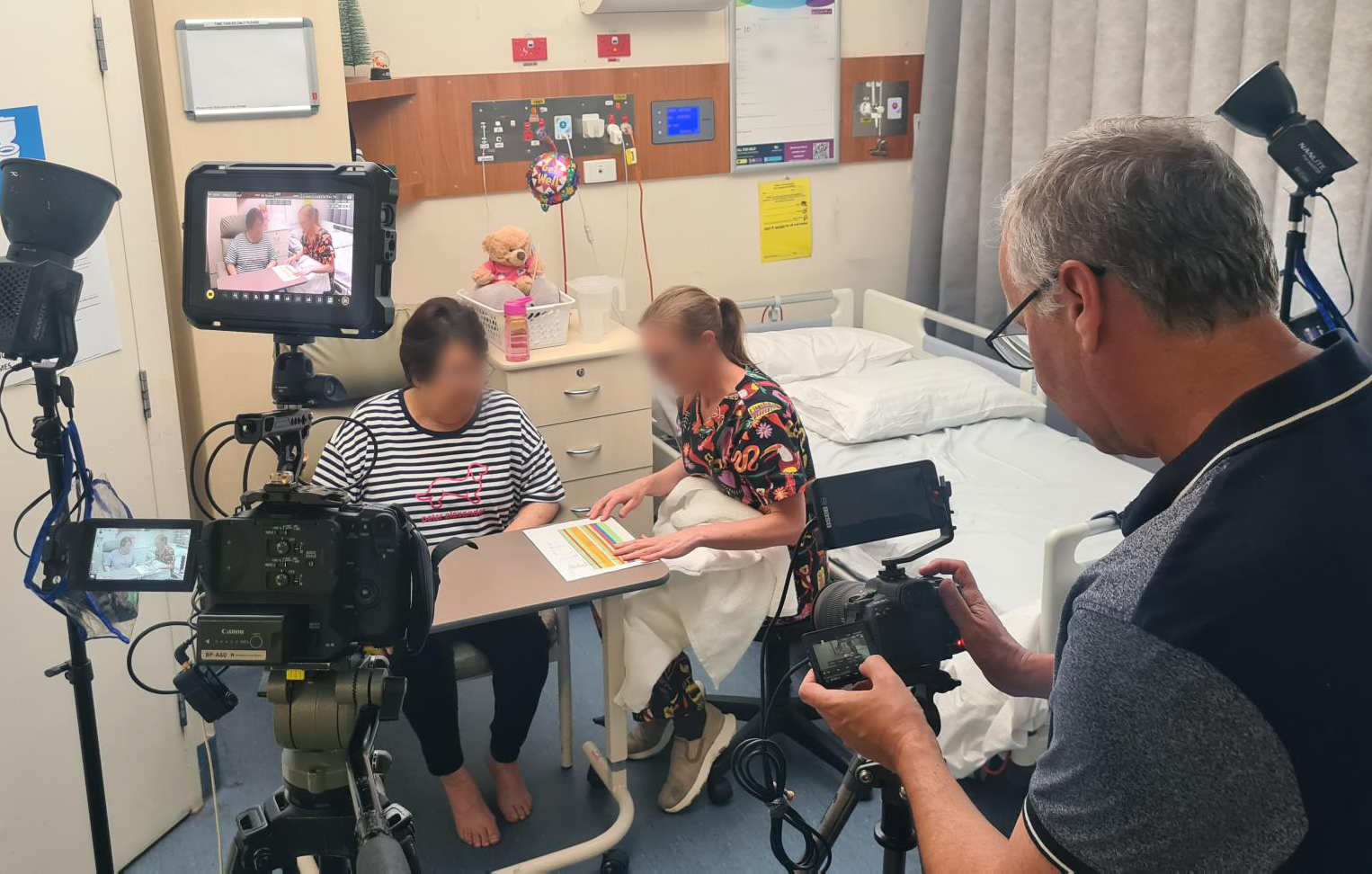
4. Film in your real working environment
Every workplace is different, so our production approach adapts accordingly.
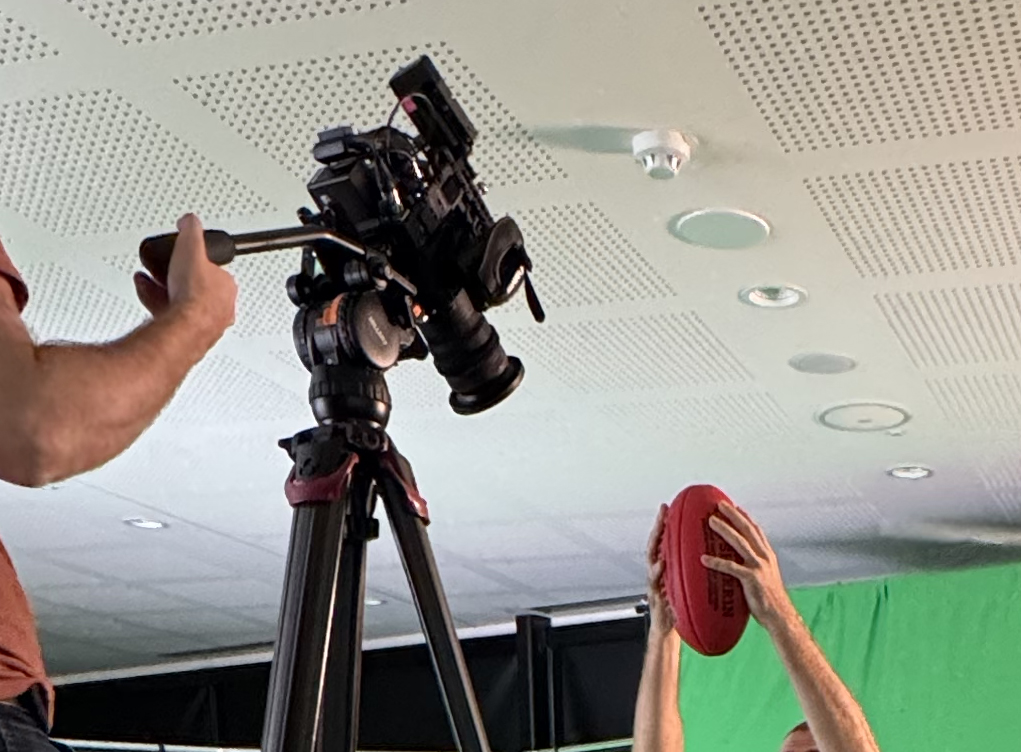
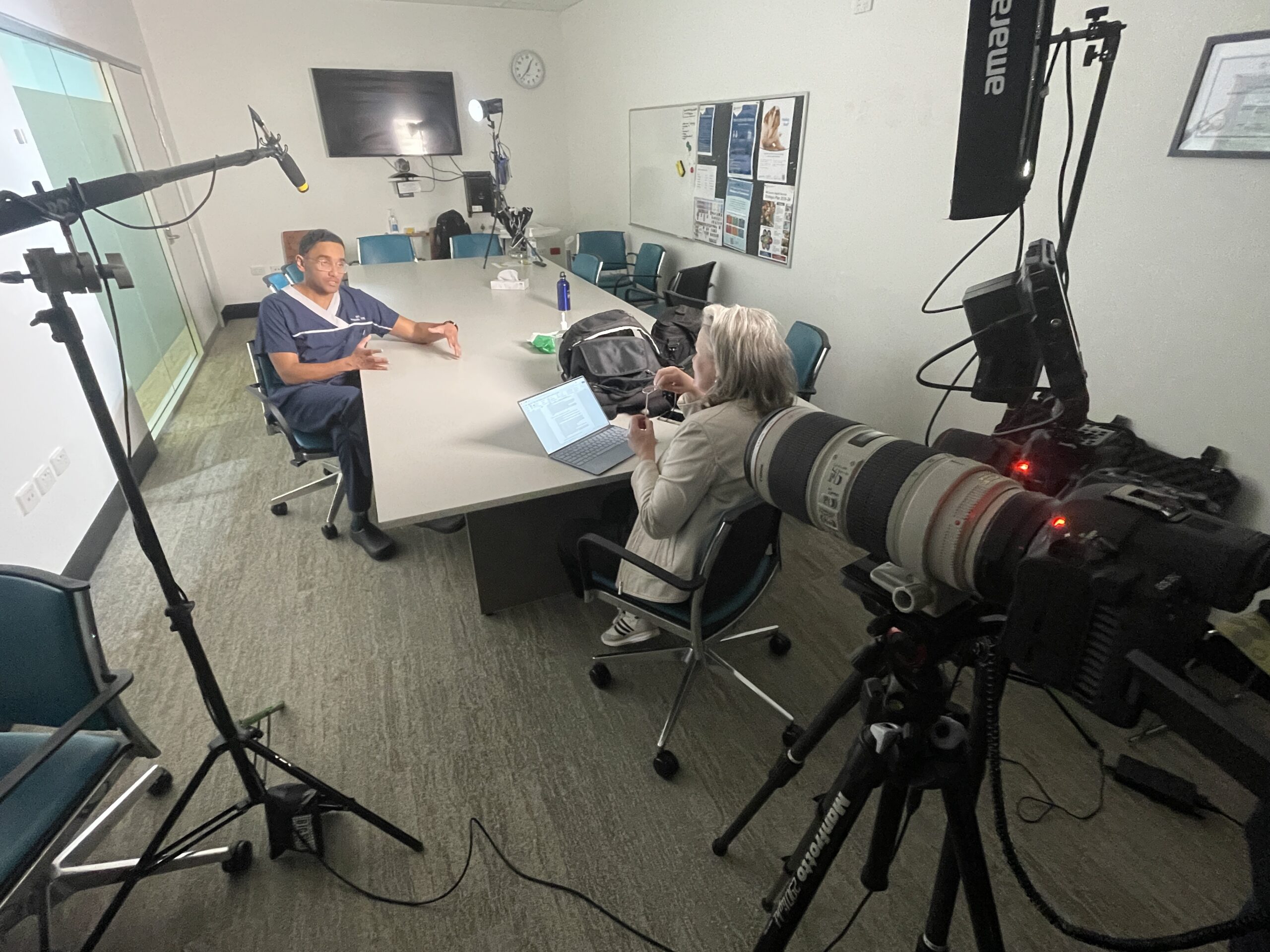
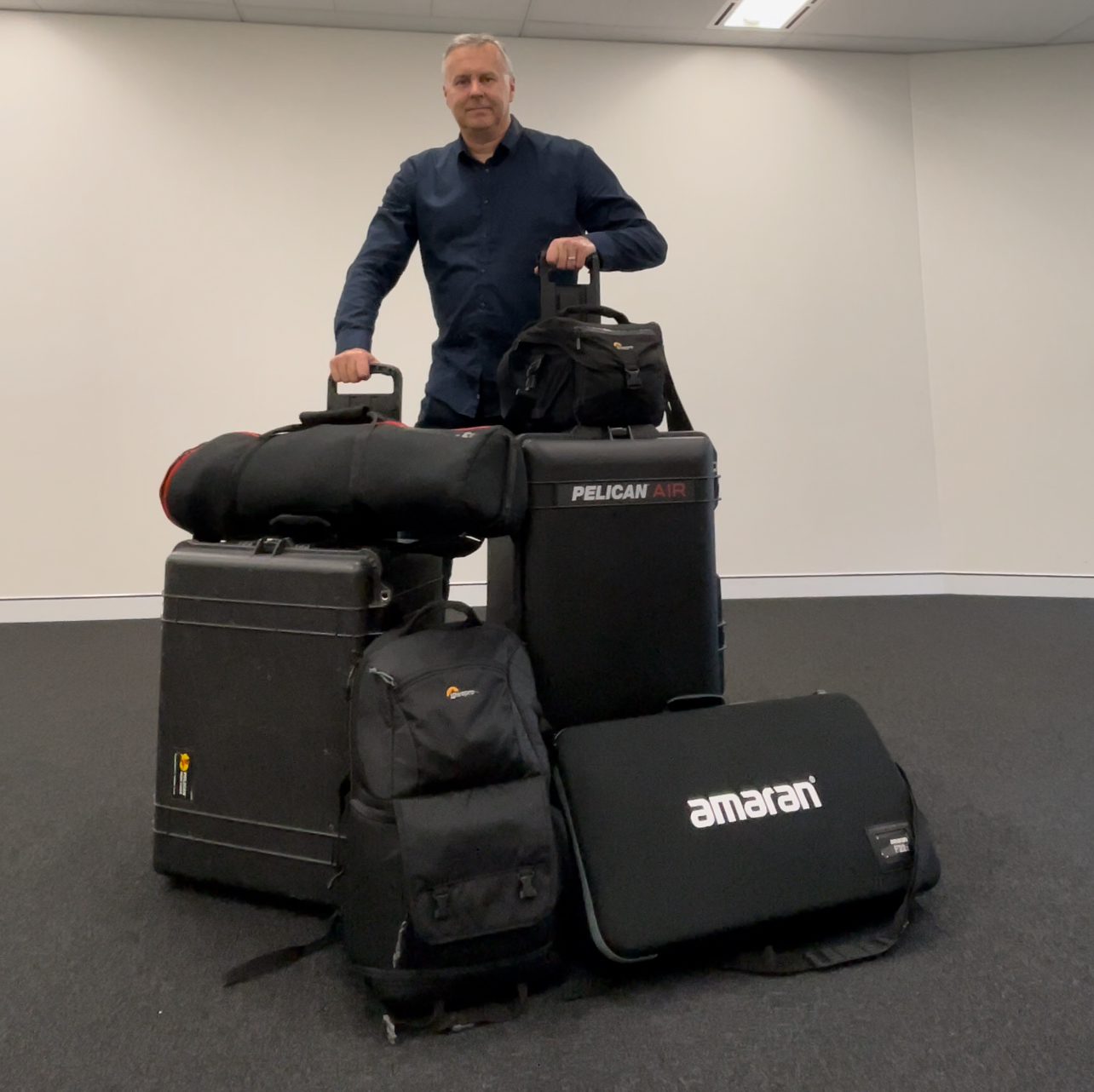
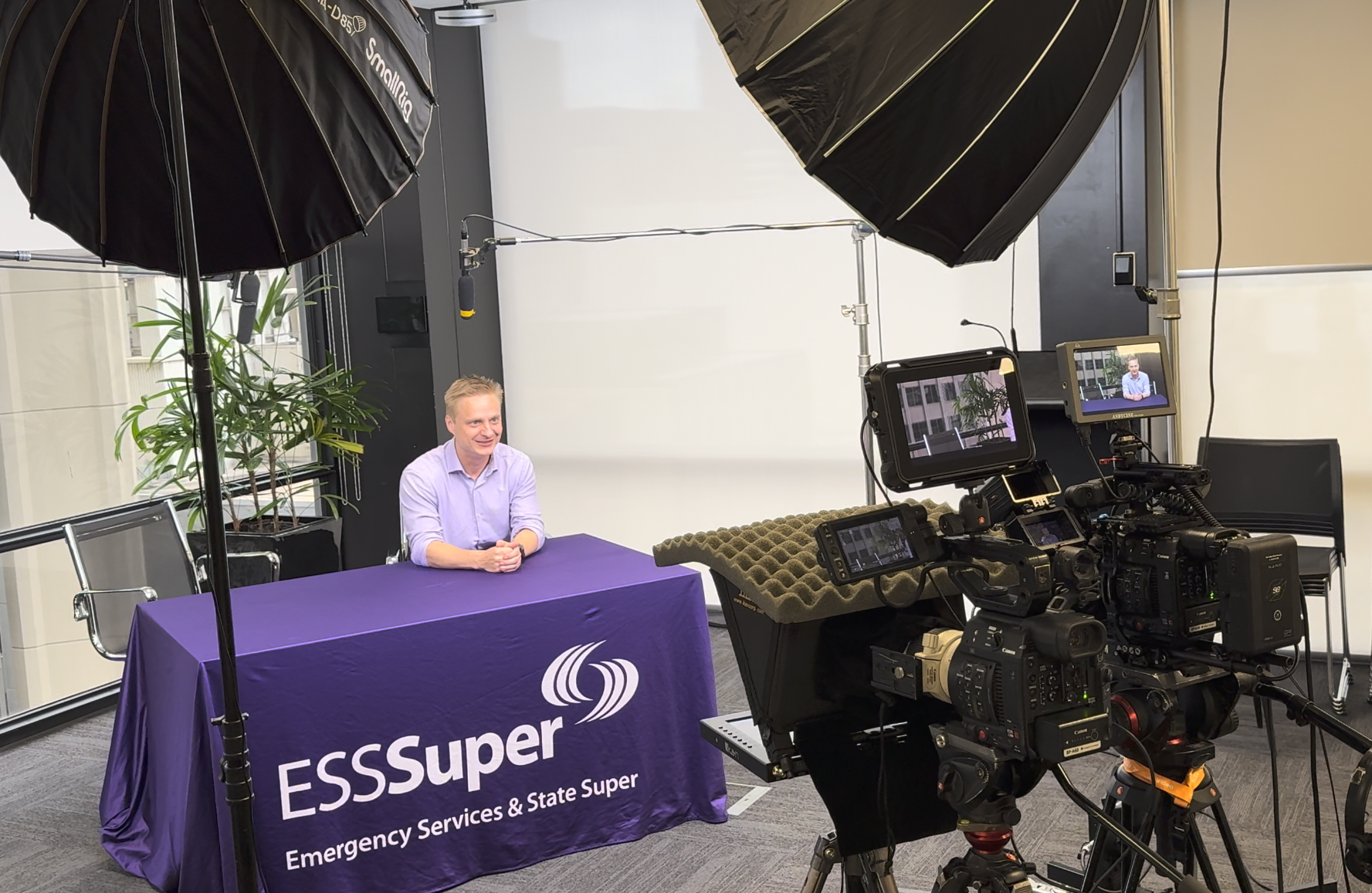
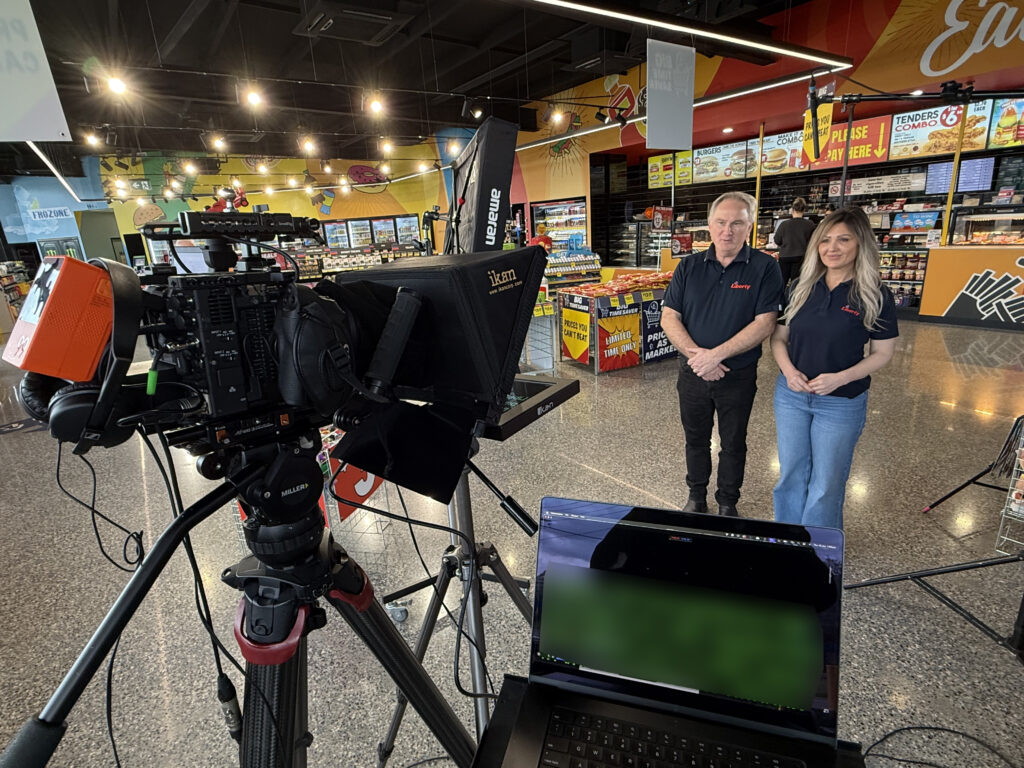
Sometimes we’re filming in a tight operational environment where a compact, portable production kit is essential. Other locations give us room for lighting, teleprompters, multiple cameras and backdrops.
The equipment should serve the training, not get in the way of it.
During filming, we also keep detailed production notes.
That’s important because demonstrating a real process can reveal things that weren’t apparent when the original script was written.
5. Refine after filming
This flexibility is one of the reasons we often recommend narration for demonstration videos.
It’s common to discover small variations or improvements once a process is physically demonstrated.
Rather than forcing the footage to match an outdated script, we can refine the script to accurately reflect what was captured.
For this reason, first edits can be supplied with temporary demonstration voiceovers. Your team can review the sequence, terminology and instructions before the final narration is recorded.
It creates another opportunity to make sure the finished training resource is accurate.
6. Create a resource that belongs to your organisation
Finally, the individual modules are edited and presented within your organisation’s visual identity.
Graphics, titles, diagrams and other visual elements can reinforce key information, while captions improve accessibility and make the videos useful in environments where viewers may not be able to listen to audio.
The finished videos can then be supplied for your learning management system (LMS), intranet, website, induction program or other training platform.
More than a library of videos
The end result isn’t simply a collection of video files.
It’s your organisation’s knowledge and experience captured in a format that is consistent, accessible and available whenever it’s needed.
Instead of relying on one person being available to demonstrate a task, the knowledge can be shared across your organisation.
Instead of explaining the same foundational information during every training session, your trainers can concentrate on questions, practical learning and individual development.
Instead of important knowledge disappearing when experienced people change roles or leave the organisation, you have an opportunity to capture some of that expertise and pass it on.
And instead of training being something that happens once, your video library becomes a resource people can return to whenever they need a refresher.
That can mean less time spent repeating training, more consistent outcomes, faster onboarding and reduced training costs.
Most importantly, it makes valuable knowledge easier to share.
What knowledge could your organisation capture?
Every organisation has processes that experienced people know almost instinctively.
The question is: how much of that knowledge could be captured once and shared many times?
It might be one procedure that every new employee needs to learn. It might be a series of safety demonstrations. It could be product knowledge, customer service training, recipes, equipment operation, property handovers or an entire learning program.
You don’t need to have the scripts written or even know exactly how many videos you need.
That’s part of the process we can help you work through.
The people who know your business best are already inside it. We help you capture what they know and turn it into a resource that keeps working.
The best training isn’t just documented – it’s demonstrated.
The first conversation doesn’t need to be about cameras, scripts or production schedules.
It starts with a much simpler question: what knowledge would you like your team to be able to access at any time?