Guided Therapy Program | Western Health
How do you create rehabilitation videos that are clinically useful, easy to follow and accessible to patients with different physical, cognitive, language and cultural needs?
Visual Culture recently worked with Dina Pogrebnoy and the clinical team at Western Health to produce an extensive library of video content for the Guided Therapy Program – a co-designed digital program supporting stroke survivors undertaking inpatient rehabilitation.
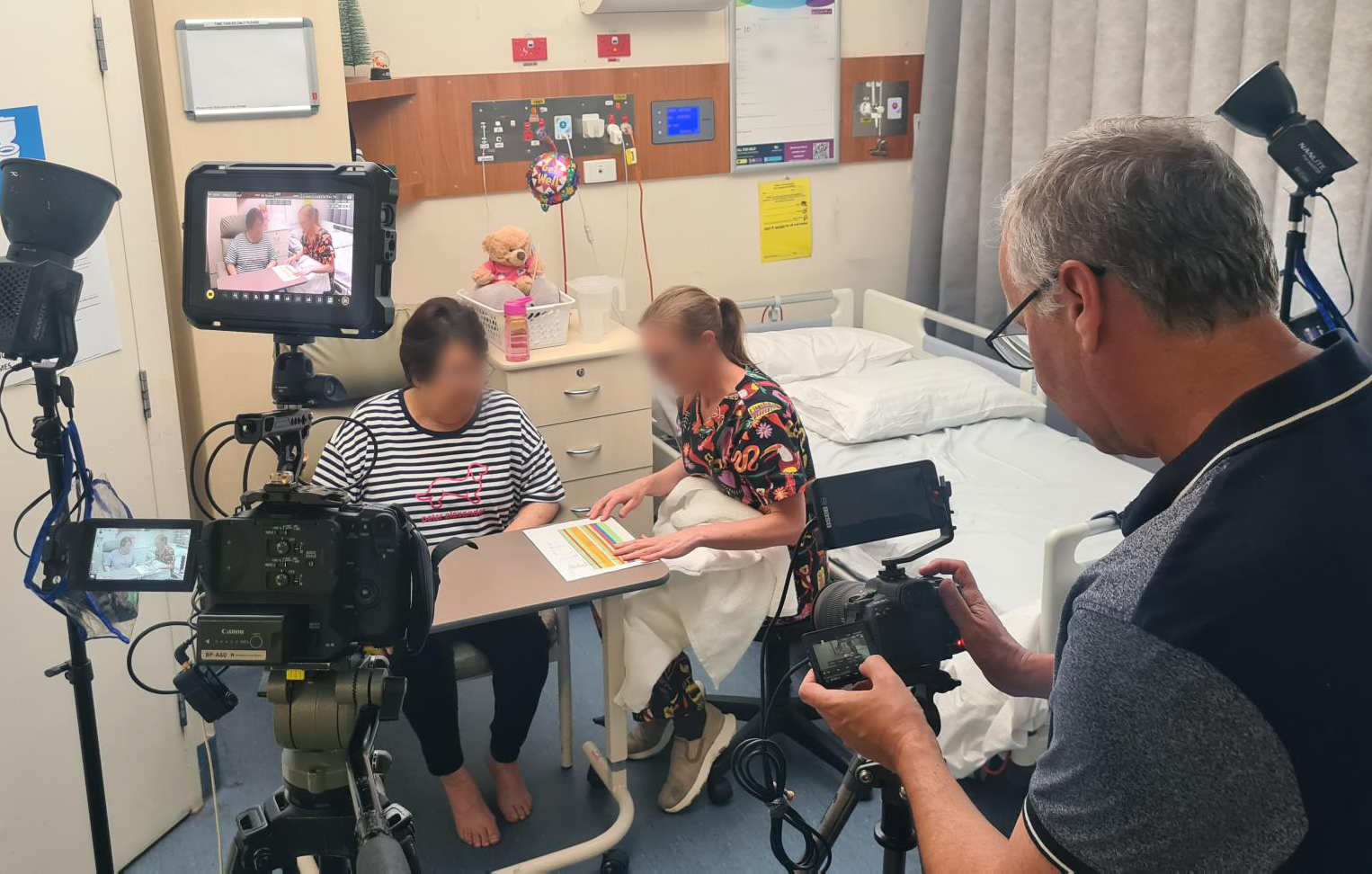
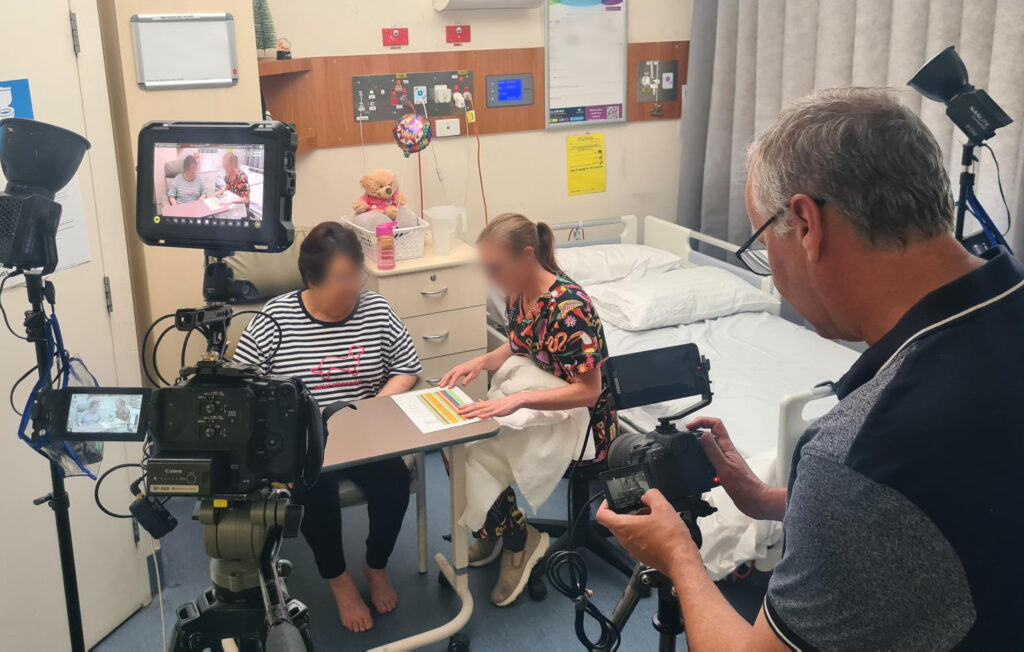
Across several days of filming, we captured more than 100 exercise and activity videos, working directly with clinicians and patients to demonstrate activities that could be undertaken independently or with support.
But the project was about much more than filming exercises.
From the beginning, consideration was given to who would be watching the videos, the challenges they might experience following a stroke, and how the content would ultimately be delivered to them.
Designing video around the patient
Rehabilitation videos need to do more than accurately demonstrate an exercise.
For someone recovering from a stroke, factors such as fatigue, cognition and aphasia can influence how they engage with and understand audiovisual information. The production therefore, needed to communicate each activity as clearly and simply as possible, while remaining useful across a diverse patient population.
Each activity was demonstrated by a clinician and a real patient. Rather than approaching the videos as traditional instructional content, we worked closely with the clinical team to determine what a patient actually needed to see to understand and undertake each activity.
We primarily used a wide shot to clearly establish the complete movement, introducing close-up shots where additional visual detail was important.
This deliberately simple approach helped keep the focus on the activity itself and created consistency across a library of more than 100 videos.
Representation and culturally diverse communities
Another important consideration was representation.
Western Health serves one of Melbourne’s most culturally and linguistically diverse communities, and patient feedback highlighted the value of seeing people like themselves demonstrating rehabilitation activities.
Using real patients alongside clinicians helped make the videos feel more representative of the people who would ultimately use them. It also reinforced an important principle for the production: accessibility isn’t only about whether information can technically be understood. Content also needs to feel relevant and relatable to its audience.
The video library has also been created with future multilingual adaptation in mind.
Plans include voiceovers and captions in multiple languages to make the content more accessible to culturally and linguistically diverse (CALD) communities. These adaptations have been made possible through a seeding grant from the Stroke Foundation and funding from Erica Foundation.
Importantly, the approach recognises that making rehabilitation content accessible involves more than translating words from one language into another. Language, cognition, visual communication, cultural representation and the way information is presented all influence how successfully someone can engage with a video.
Supporting independent and assisted rehabilitation
The activities captured during production cover varying levels of patient independence.
Some are designed to encourage self-directed activity, allowing patients to continue their rehabilitation outside formal therapy sessions. Others are intended to be undertaken with assistance from a family member, carer or clinician.
This meant the videos needed to communicate not only what an activity looked like, but also the appropriate level of assistance and interaction required.
Capturing a real clinician and patient performing each activity gave viewers a practical reference for both the movement and how support could be provided.
From video library to an interactive rehabilitation tool
One of the most rewarding aspects of the project was seeing the completed video library become part of a larger digital experience.
The content was integrated into a co-designed tablet application developed by Dr Matthew Berryman, who is himself a stroke survivor.
Rather than patients simply being given access to a collection of videos, clinicians can prescribe a customised Guided Therapy Program containing activities appropriate to the individual patient.
Patients can then access their program from a tablet in their room and undertake activities in their own time.
Within the application, they can watch each demonstration, pause, rewind and replay it as often as required. After completing an activity, patients can record their engagement and provide feedback about how they found it.
From the clinician’s perspective, the platform provides a straightforward way to prescribe and customise activities while also gaining insight into patient participation.
Thinking beyond the video
For us, this project reinforced an important part of healthcare video production: the success of a video isn’t determined only by how well it has been filmed.
Where it appears, how it is accessed, who is watching it and what that person needs to do after watching it can be just as important as the production itself.
A beautifully produced instructional video has limited value if the intended viewer finds it difficult to navigate, cannot understand the information, or doesn’t feel confident putting what they’ve seen into practice.
The Guided Therapy Program brought together clinical expertise, patient perspectives, video production, accessibility considerations, co-design and interactive technology.
Being able to follow the project from filming through to seeing patients interact with the content on a tablet was particularly valuable. It demonstrated how video can become part of a broader healthcare experience rather than existing as a standalone communication asset.
What comes next?
A trial is planned for 2027 to evaluate the safety and a signal of efficacy of the Guided Therapy Program.
We’re looking forward to seeing what is learned from the trial and how those findings might inform the future development of accessible, self-directed rehabilitation resources.
Thank you to Dina Pogrebnoy, Dr Matthew Berryman, the Western Health clinical team, and particularly the patients and clinicians who generously participated in the filming.
Need to create healthcare or patient education video content?
At Visual Culture, we work with healthcare organisations, clinicians and researchers to translate complex health information into clear, engaging and accessible video.
Whether you’re developing patient education resources, clinical training, rehabilitation content or video for a digital health platform, considering how and where your audience will use the content is central to our production approach.
Talk to Visual Culture about your next healthcare video production project.