When planning a video shoot, one of the most common questions communications and marketing teams ask is: should the presenter use an autocue, ad-lib the message, or deliver responses in an interview format?
The reality is that there isn’t a single correct answer. Each approach can work well depending on the situation, the message, and the person on camera.
The ultimate goal is always the same: to capture a delivery that feels natural, confident and authentic.
The Case for Using an Autocue
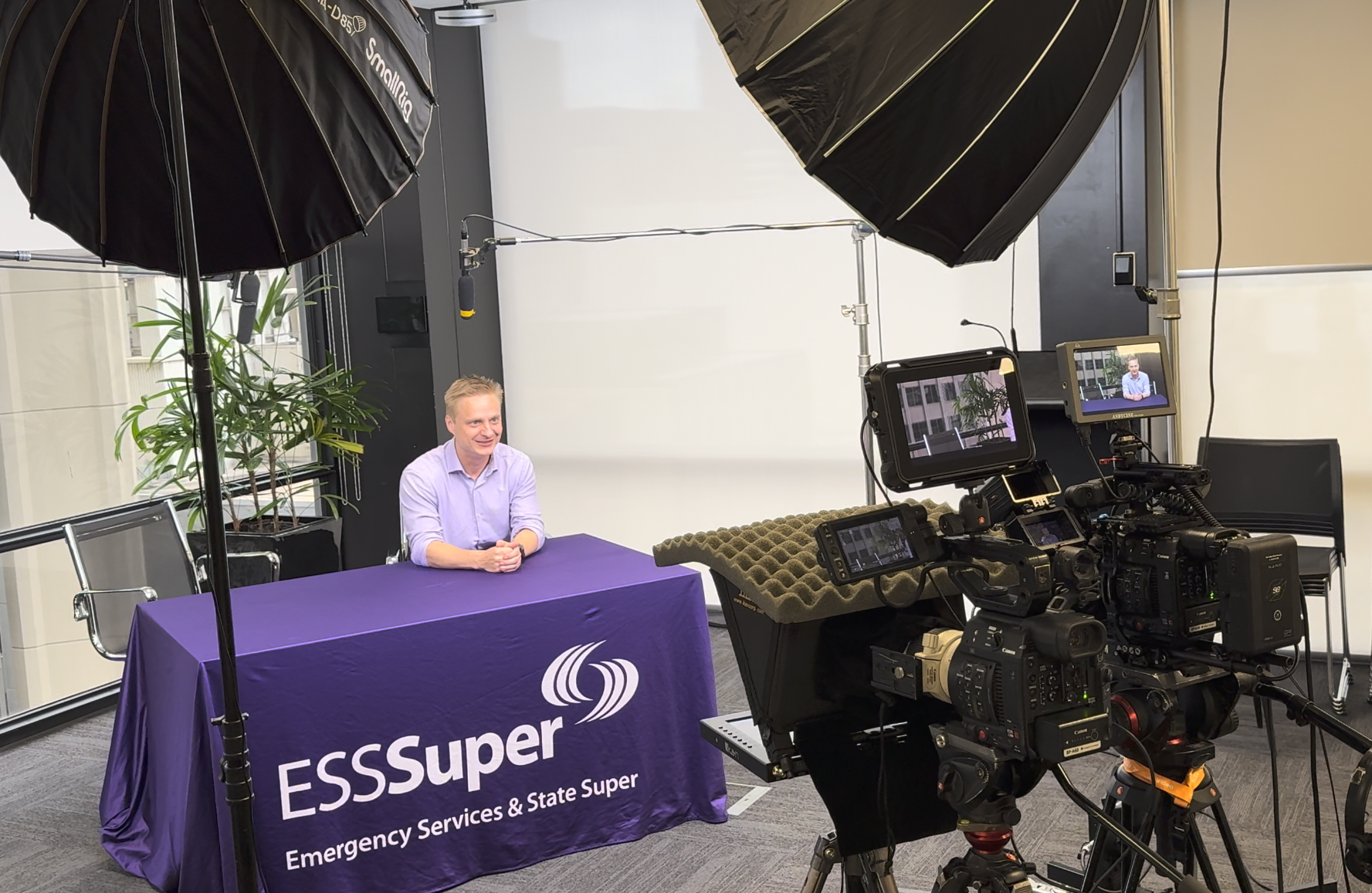
An autocue can be extremely useful when the video includes complex messaging, technical details, or important statistics that must be communicated accurately.
For example, an autocue often works well for:
-
Learning and development modules
-
Training videos
-
Corporate announcements
-
Detailed product or service explanations
-
Longer presentation-style videos
Using an autocue ensures the messaging stays precise and consistent.
One of the advantages of filming with a professional video team is that scripts can be adjusted on the fly. Written copy often needs small tweaks once spoken aloud, and we can easily refine sections during filming to make the delivery sound more natural.
If the presenter is new to using an autocue, it’s completely normal for the first take to feel a little unfamiliar. Usually the first take helps the presenter get comfortable with the pacing and script, while the following takes feel far more natural.
The autocue settings can also be adjusted to support the presenter, including:
-
Font size
-
Scrolling speed
-
Script formatting
Interestingly, many presenters end up ad-libbing slightly while reading from the autocue, which can create a very natural delivery.
When Ad-Libbing Works Best
For people who are confident speaking about their subject matter, an ad-libbed approach can often feel more relaxed and authentic.
Instead of delivering a long script in one take, we often recommend filming in smaller sections. This allows the presenter to focus on delivering each part clearly and comfortably before moving on.
Filming multiple takes is completely normal during video production. The aim isn’t to capture perfection in a single take, but rather to capture the best and most natural delivery.
Why Interview Style Can Be the Most Natural Option
Another highly effective approach is filming in an interview format.
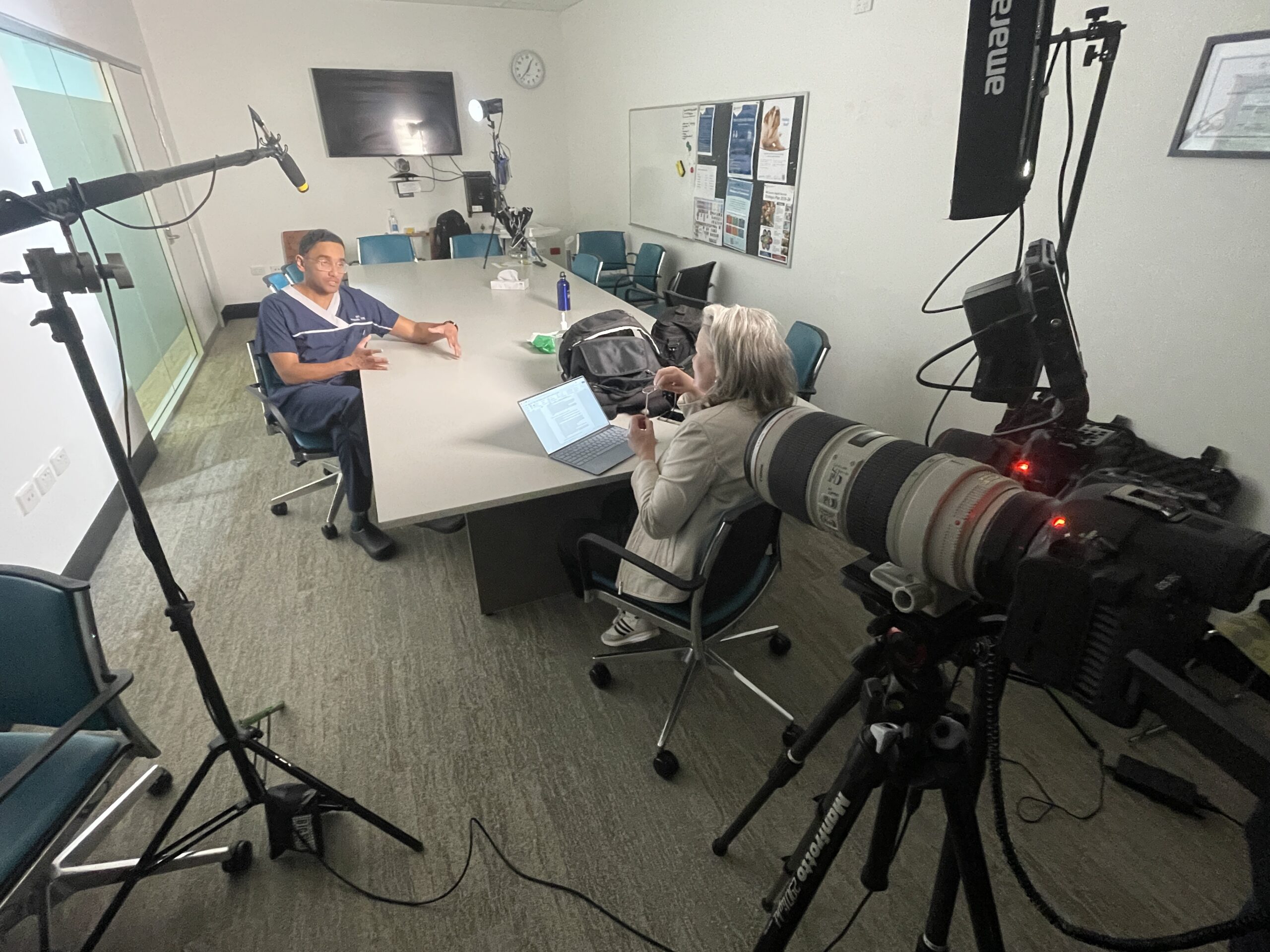
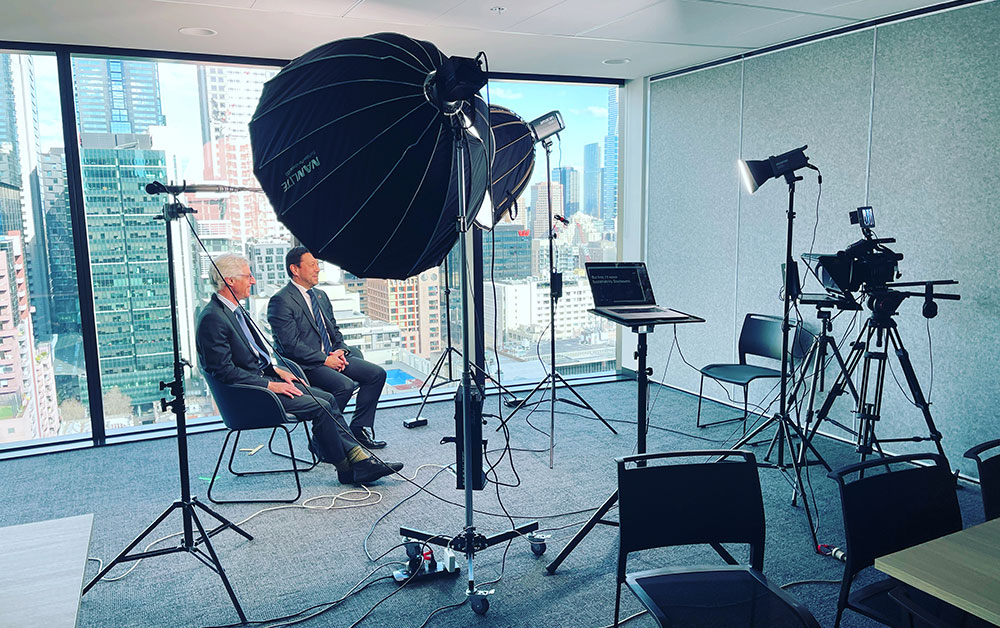
In this setup, a producer or communications lead asks questions off camera while the presenter responds naturally. Because the subject matter expert already knows the topic well, the responses often feel conversational and genuine.
This approach works particularly well for:
-
Leadership communications
-
Thought leadership content
-
Culture and employer brand videos
-
Internal storytelling
If an important point is missed during a response, it’s easy to simply record another take.
The presenter can either speak directly to camera or respond to the interviewer off camera depending on the tone and style of the video.
A Few Practical Filming Tips
During filming, there are a few techniques that help improve the final result.
For example, many productions are filmed in 4K resolution but edited in HD. This allows editors to subtly zoom in or adjust framing between cuts, which creates a smoother and more engaging edit.
Maintaining eye contact with the camera lens is also important when presenting directly to camera. It may feel unusual at first, but the lens represents the audience, and maintaining that connection helps build trust with viewers.
If an autocue isn’t available, it’s generally best to avoid using cue cards placed near the camera. Even small eye movements between the camera and cue cards can be noticeable and may break the viewer’s sense of connection with the presenter.
If cue cards are necessary, an interview-style setup where the presenter speaks to someone off camera can work much better.
Choosing the Right Approach
Ultimately, the choice between autocue, ad-lib delivery, or interview format should come down to what makes the presenter feel most comfortable and confident.
Comfortable speakers almost always produce the most natural and engaging video content.
With the ability to film multiple takes and refine messaging during production, the process is far more flexible than many people expect.
The key is simply choosing the approach that allows the message – and the person delivering it – to come across authentically.