When organisations think about creating learning content, the process often starts with existing materials.
There might be policies to work from, presentations to adapt, procedures to explain or written resources that need to be turned into something more engaging.
But sometimes the most valuable source of learning content isn’t sitting in a document at all.
It’s sitting in the experience of your people.
Subject-matter experts (SMEs) can hold an enormous amount of knowledge that has been accumulated over years – sometimes decades – of working in their field. They know the formal processes, of course, but they also know the realities of applying them. They have stories, examples, lessons learned and an understanding of the nuances that rarely make their way into formal documentation.
The challenge for learning designers is: how do you capture that knowledge and turn it into something others can learn from?
One particularly effective approach is the expert interview.
The knowledge that isn’t written down
There’s an important difference between knowing the rules of a profession and knowing how to practise it well.
Formal learning materials are generally good at communicating explicit knowledge: processes, principles, frameworks, technical information and defined procedures.
Experience adds another layer.
An experienced practitioner can explain what happens when the situation doesn’t quite fit the textbook. They can describe the factors they consider when making a difficult decision, the mistakes they’ve learned from, the signs they’ve learned to recognise and the questions they’ve learned to ask.
This kind of knowledge can be difficult to capture in a conventional script.
Ask an experienced practitioner to “write down everything you know” and you may not get very far. Much of their knowledge has become intuitive. They may not even recognise some of their experience as something worth teaching.
Put them in conversation with someone who understands their world, however, and something different can happen.
Why interviews work so well with subject-matter experts
An interview allows expertise to emerge through conversation.
Instead of asking an SME to become a presenter, scriptwriter or educator, you can allow them to do something much more natural: talk about what they know.
A good interviewer can start with a clear set of learning objectives while still allowing the conversation to go somewhere unexpected.
They can ask:
- Can you give me an example?
- What happened next?
- Why did you make that decision?
- What would you do differently now?
- What do people new to the field often misunderstand?
- What would you want someone encountering this situation for the first time to know?
Those follow-up questions can be where some of the richest learning content emerges.
The initial answer gives you the information. The conversation that follows can give you the experience behind it.
The interviewer matters, too
There’s another dimension to expert interviews that is easy to overlook: who is asking the questions?
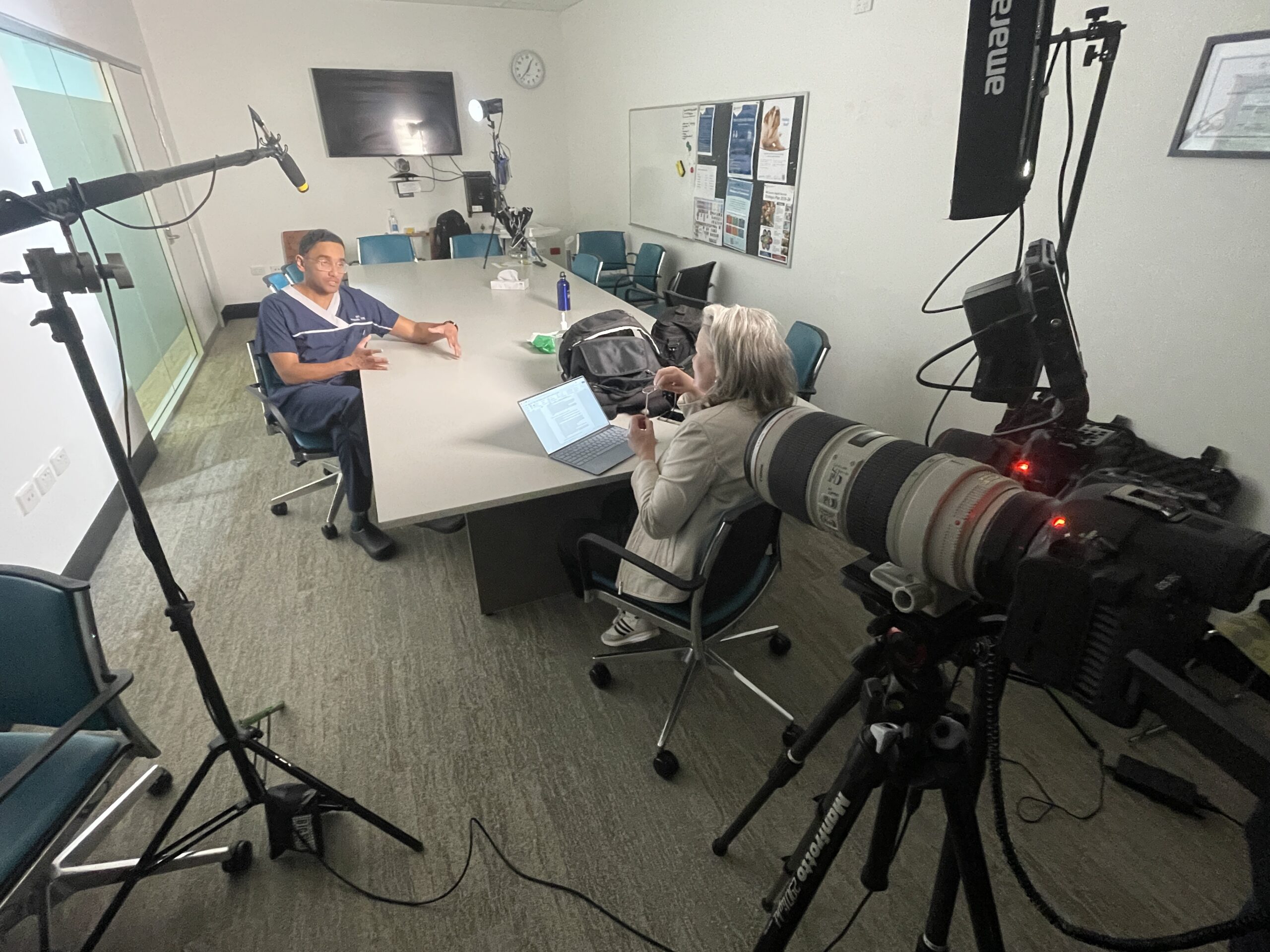
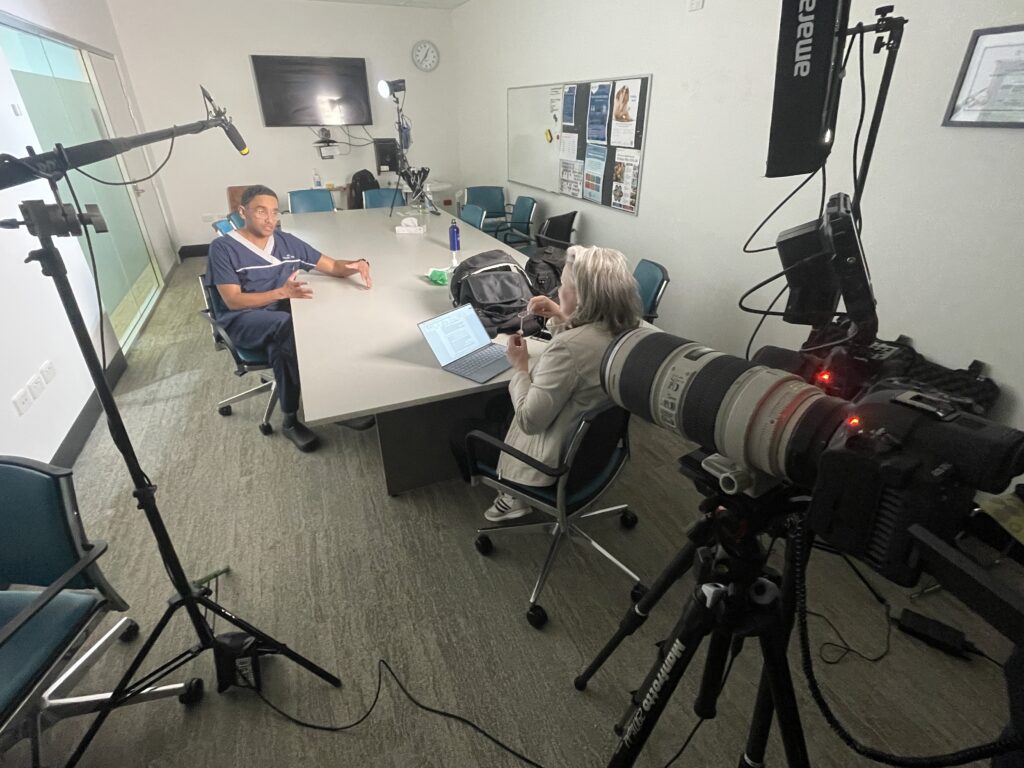
This became particularly apparent in our work with the Royal Australasian College of Surgeons (RACS) on its Remote, Rural and Regional Professional Skills Course.
The course drew on contributions from more than 200 surgeons, trainees, clinicians and medical educators, bringing together a substantial body of professional knowledge and experience relating to healthcare in rural, regional and remote settings.
Our role included capturing specialist insights from health professionals with direct experience in these environments.
Importantly, the interviews were conducted by Dr Bridget Clancy, herself a subject-matter expert.
This created something very different from a conventional presenter-and-interviewee dynamic.
Bridget could have genuine peer-to-peer conversations with the health professionals being filmed. Because she understood the subject, she could recognise when an answer contained something worth exploring further. She could ask informed follow-up questions, understand the significance of a particular experience and invite the interviewee to unpack the reasoning behind their response.
The interview became more than a mechanism for collecting answers to predetermined questions.
It became a way of exploring expertise.
Subject-matter expert to subject-matter expert
There’s a useful lesson here for organisations planning their own learning resources.
Sometimes the best person to interview your SME is another SME.
That doesn’t necessarily mean they need to have exactly the same specialisation or experience. But having enough knowledge of the subject to understand what is being said – and to recognise where the interesting threads are – can make a significant difference.
There is also a conversational benefit.
Talking to a knowledgeable peer can feel very different from delivering a scripted presentation to camera. The person being interviewed doesn’t necessarily need to think about how to “perform” or deliver the perfect answer.
They can concentrate on the subject.
The interviewer can prompt, challenge, clarify and explore.
The result can feel more authentic because, fundamentally, it is a real conversation between people who understand the field.
For learning content, that authenticity has value. Learners aren’t simply hearing a list of facts. They’re hearing how experienced professionals talk about their work, think through problems and reflect on their experiences.
Capturing the conversation is only the first step
Of course, a great interview isn’t automatically a great learning resource.
An hour-long conversation with an expert may contain five minutes of exceptional insight – alongside tangents, repetition, background information and material that isn’t relevant to the particular learning objective.
This is where the learning and production process becomes important.
For the RACS project, the interviews weren’t simply published as a collection of long-form conversations. They were edited into shorter modules organised around particular topics and themes.
This allowed relevant perspectives from different experts to be brought into the course at the point where they would be most useful to learners.
That distinction is important.
The objective isn’t simply to record an expert.
It’s to capture their expertise, identify the parts that have learning value, and then shape those insights into resources that support a particular learning outcome.
One interview can create many learning assets
Thinking this way can also change how organisations approach video production.
Rather than commissioning a subject-matter expert to deliver one tightly scripted five-minute video, it may be worth capturing a deeper conversation and then looking at the different learning assets that can emerge from it.
One interview might contain an explanation of a key concept, a real-world example, a common misconception, a useful piece of advice and a reflection on a challenging experience.
Those don’t necessarily have to become one video.
They might become several short videos used in different parts of a course. An expert’s story might introduce a topic. A practical example might sit alongside a scenario. A short reflection might be used to prompt discussion. Another excerpt might reinforce a key idea at the end of a module.
The value lies not just in capturing content for today’s learning program, but in creating a reusable library of organisational knowledge.
Your experts are a learning resource
When planning a learning project, it’s natural to ask questions such as:
What information do learners need?
What existing content do we have?
What do we need to write?
But there are a few other questions worth adding:
Who in our organisation knows this subject deeply?
What have they learned through experience that isn’t captured in our existing materials?
Who could have the right conversation with them to draw that knowledge out?
And, importantly:
How can we capture that expertise before it is lost?
People move roles. Experienced employees retire. Teams change. Projects finish. Unless their knowledge has been captured in some form, valuable experience can simply leave with them.
Video can’t capture everything someone knows. But it can preserve something that written documentation often struggles to retain: the person explaining an idea in their own words, sharing an experience, describing why something matters and reflecting on what they have learned.
Sometimes the best learning content starts with a conversation
Subject-matter experts shouldn’t simply be viewed as people who review a script at the end of the learning design process.
They can be the source of the learning itself.
With clear learning objectives, a knowledgeable interviewer and a production process designed to identify and shape the strongest insights, an expert conversation can become a rich source of practical, credible and engaging learning content.
The RACS project was a powerful example of this approach: experts sharing their experience, guided by an expert interviewer, with those conversations then shaped into focused resources for other health professionals.
So before you start writing the script for your next learning video, it may be worth asking a different question.
Who should we be talking to?