If you’ve spent any time on social media over the last few years, you’ve probably witnessed the evolution of AI video – from the early, glitchy days of Will Smith eating pasta to today’s unsettlingly realistic, yet still imperfect, AI-generated scenes.
2025 has been a transformative year for AI video. Models have improved dramatically in motion consistency, realism, character continuity, and scene coherence. We’re seeing far fewer spaghetti faces and uncanny morphing frames. But even with these leaps forward, AI video still isn’t quite ready to take over high-end corporate content—at least not reliably.
And I’ve seen it firsthand.
When AI Video Almost Saved a Project… But Not Quite
Recently, we were short on stock footage for a client project. We needed a full sequence featuring the same talent across multiple scenes, but a dedicated shoot wasn’t in the budget. What the client did have was a great set of photos of a small business owner – various angles, a few scenarios—perfect raw material to build a 60-second explainer video if AI could bring them to life.
So we gave it a try.
Using Runway, we animated the photos into video sequences. The results? Impressive… at first glance. But once you watch closely, you can tell:
-
Blinks happen a half-second too late
-
Micro-expressions don’t quite match
-
Movements feel just off
-
Hands… well, still doing weird AI things sometimes
And sure, with enough prompting expertise you can push AI far. But the time investment wasn’t feasible for this project. Ultimately, we sourced a brilliant stock sequence that matched everything we needed.
But give it 12 months?
AI may very well deliver exactly what we were looking for – fully convincing, consistent character-driven video content.
Which leads to the Top 5 AI Video Trends I see shaping 2026 and beyond.
Top 5 AI Video Trends for 2026
1. AI-Enhanced Stock Libraries Will Become the New Production Powerhouse
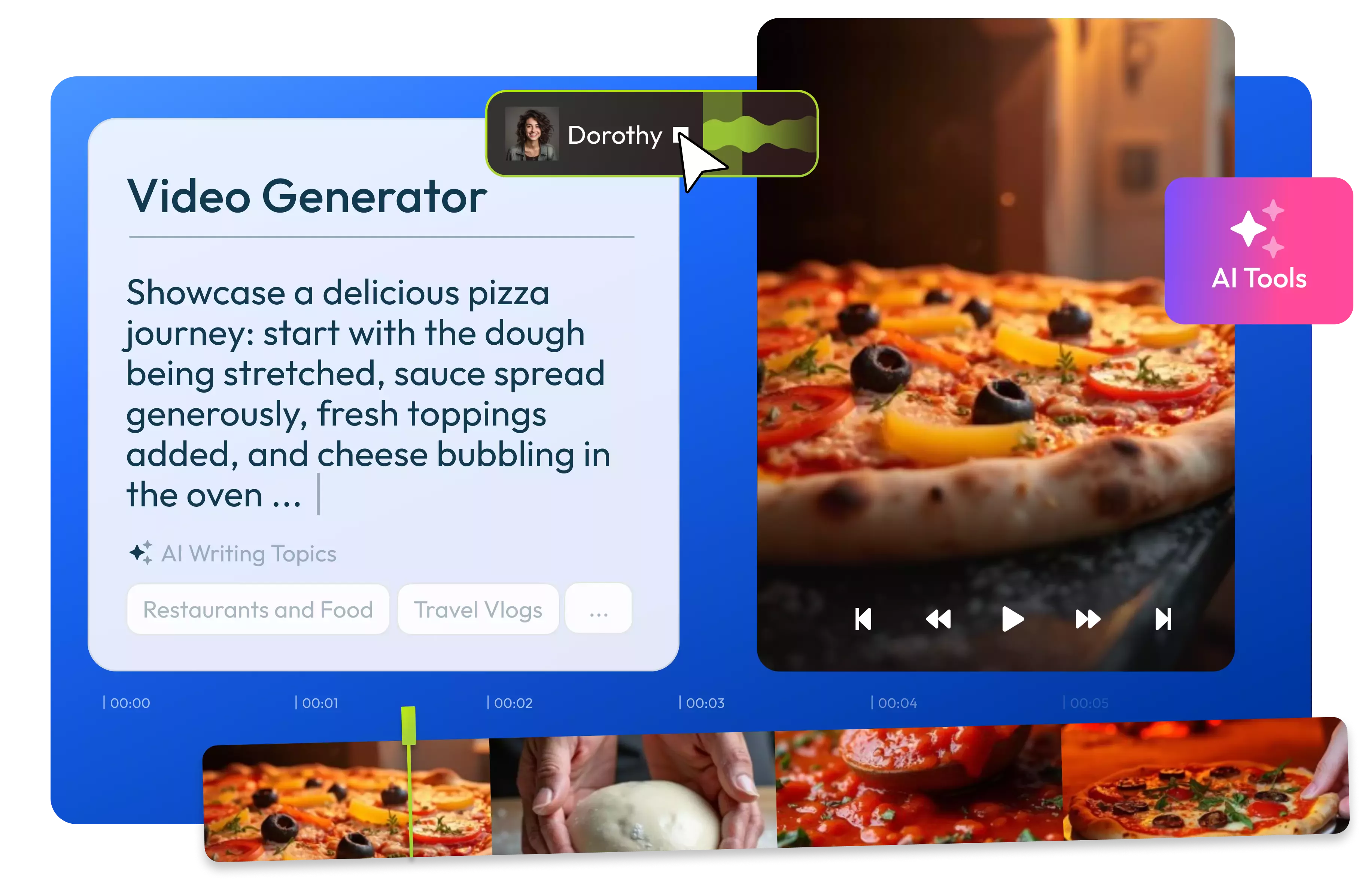
So instead of fighting it, they’re evolving.
Expect to see stock platforms offering:
-
Extended versions of existing clips
-
New camera angles generated from a single shot
-
Background replacements that actually look seamless
-
Consistent character modelling across multiple clips
-
Style, wardrobe, or lighting adjustments on demand
This means you’ll still license footage – but now you’ll customise it like never before. Stock won’t disappear; it will become editable.
2. A New Job Title Goes Mainstream: AI Video Prompter
Traditionally, video production has clear roles: director, editor, camera op, producer, animator, colourist…
In 2026, expect to see another one join the list:
The AI Video Prompter.
This role will specialise in:
-
Crafting highly detailed prompts
-
Understanding model strengths and limitations
-
Iterating scenes for realism and continuity
-
Matching AI-generated footage to brand identity
-
Troubleshooting uncanny or inconsistent outputs
Prompters will become to AI video what colourists became to digital cinematography—critical, specialised, and in high demand.
And it won’t just be for ads.
Training content, animated sequences, explainer videos, micro-content, and even stock libraries will rely on expert prompting.
3. AI Enhancement Tools Will Keep Elevating Everyday Production
I use AI tools daily – audio clean-up, visual enhancement, colour correction, transcript generation, captioning, upscaling, noise removal. These tools have already become essential.
In 2026, expect:
-
More accurate speech isolation
-
Faster auto-grading that understands mood and brand palettes
-
Smarter object removal
-
More robust face-relighting and re-framing
-
Real-time AI cleanup directly inside NLEs
These enhancements won’t replace videographers – they’ll supercharge them.
4. AI Editing Will Improve—but Human Editing Will Still Matter
AI editing is evolving quickly. Right now it’s great for:
-
Separating interview topics
-
Removing filler words
-
Auto-cutting to the speaker
-
Generating rough cut story structures
-
Suggesting B-roll based on transcript keywords
Soon, AI editors will create full narrative assemblies based on prompts:
“Build a 3-minute story focusing on customer impact, using uplifting music and selecting shots with smiling faces.”
But here’s the caveat—editing is emotional.
Humans read subtle cues:
-
Breaths
-
Pauses
-
Micro-expressions
-
When someone is holding back tears
-
When a smile is genuine vs polite
AI will help organise, polish, and speed up workflows.
But the heart of an interview-driven story? That still requires a human editor… at least for now.
5. AI Avatars Will Become Common – and Surprisingly Personal
AI presenters are everywhere already, but 2026 will take it further.
We’ll see two parallel trends:
• Hyper-real avatars created from real people
Feed the system enough footage and voice samples, and it can recreate your on-camera persona. Great for product demos, training, internal comms, or localisation.
• Unique AI characters for faceless content
Perfect for creators who don’t want to be on camera, but still want a consistent presence.
• Personalised messaging at scale
Record one presentation, then update:
-
The viewer’s name
-
Their department
-
Their location
-
Their industry
-
Even the time of year
Video content becomes dynamically tailored without additional filming.
Special Mentions for 2026
AI Video Slop Will Flood Social Media
We’re already seeing it: endless low-effort AI channels.
2026 will bring more noise. The challenge? Standing out with intentional, well-crafted content.
Film & TV Will Use AI More Openly
AI background generation, crowd creation, and pre-viz tools will become standard in larger productions.
AI Will Streamline Production Even Further
Scheduling, shot lists, script refinement, voiceovers, and asset management will become more automated.
Authenticity & Trust Will Become Critical
As AI blurs reality:
-
Will viewers trust corporate content less?
-
Will brands need disclaimers?
-
Could a news outlet mistakenly air an AI-generated clip?
Transparency will matter more than ever.
Final Thoughts: 2026 Is the Year AI Video Becomes Truly Useful
AI video isn’t fully replacing real production anytime soon. But it is becoming an incredible assistant – one that enhances creativity, fills production gaps, and opens new storytelling possibilities.
And like our recent client project showed, AI isn’t always the answer… yet.
But by this time next year?
AI may finally deliver the realism and consistency we’ve been waiting for.